
How to Use a Pag-IBIG Loan to Buy Property in Cebu
Buying a home in Cebu often comes down to one question: how will you finance it without stretching your monthly budget too far? For qualified Pag-IBIG members, a Housing Loan can help pay for a house, condominium, residential lot, construction, home improvement, or refinancing. However, approval still depends on your income, membership record, property documents, appraisal, and the Fund’s current lending rules.
Key Takeaways
- Qualified Pag-IBIG members can use a Housing Loan to buy a residential lot, house and lot, townhouse, or condominium, or to build, improve, or refinance a home.
- Pag-IBIG raised its maximum housing loan amount to ₱10 million per borrower in 2026, subject to credit evaluation, capacity to pay, property appraisal, and other loan rules.
- Regular Pag-IBIG Housing Loan rates may go as low as 5.75% per year, depending on the fixing period. Qualified borrowers may also access promotional rates as low as 4.5% fixed for three years for eligible applications filed through December 31, 2026.
- A property is not automatically eligible just because it is in Cebu or sold by a known developer. The borrower, property documents, appraisal, and transaction still have to meet Pag-IBIG requirements.
- Before paying a reservation fee, confirm the financing arrangement and prepare enough cash for equity and other purchase costs that may not be included in the loan.
What the Pag-IBIG Fund Housing Loan Actually Covers

The Pag-IBIG Fund Housing Loan covers several property-related needs for qualified members. You can use it to buy, build, improve, or refinance a home, subject to Pag-IBIG approval and the property’s appraisal and legal review.
Here’s what you can typically use it for:
- Buying a residential lot
- Purchasing a house and lot
- Buying a condominium unit, whether brand new or pre-owned
- Building a house on land you already own
- Improving or renovating an existing home
- Refinancing an existing housing loan with another lender, subject to Pag-IBIG rules
If you’re buying in Cebu, the property still has to meet Pag-IBIG’s requirements for ownership, documentation, valuation, and residential use. A house or condo in Cebu City, Lapu-Lapu, Mandaue, or Talisay is not automatically approved simply because of its location.
The final amount Pag-IBIG approves depends on several factors. These include your capacity to pay, the amount you apply for, the property appraisal, and the Fund’s loan-to-appraised-value rules.
Because of this, you should not assume the loan will cover the seller’s full asking price.
Plan for other purchase expenses as well. Taxes, registration expenses, transfer-related costs, insurance, and required equity may need to be paid separately.
Check the title and property documents early so you know what needs to be settled before closing.
For a broader look at how financing fits into a Cebu property purchase, see Cebu Grand Realty’s property financing guide.
Pag-IBIG Loan Requirements in the Philippines
If you’re searching for Pag-IBIG loan requirements in the Philippines, start with the borrower requirements before looking at properties. This can save you time later, especially if you need to update your membership records or prepare income documents.
For a Pag-IBIG Housing Loan, applicants generally need to meet the Fund’s membership, age, income, credit, and property requirements.
| Requirement | What to check |
|---|---|
| Pag-IBIG membership | At least 24 posted monthly Pag-IBIG Savings contributions, subject to current Fund rules |
| Age | Must meet Pag-IBIG’s age requirements at application and loan maturity |
| Income | Enough verifiable income to support the requested monthly payment |
| Credit and loan record | Existing Pag-IBIG obligations and previous housing loan records may be reviewed |
| Identification | Valid government-issued identification |
| Property documents | Title and other documents required for the type of property being financed |
| Property appraisal | The property must pass Pag-IBIG’s appraisal and legal review |
When starting an online Housing Loan Application, Pag-IBIG currently asks applicants to prepare:
- A completed Housing Loan Application
- Proof of income
- One valid government-issued ID with signature
- A clear selfie showing the ID
Additional requirements depend on your employment status and the type of property or loan purpose.
Locally employed applicants, self-employed members, and OFWs may have different proof-of-income requirements.
Property documents also vary. Buying a completed house or condominium requires different paperwork from building a house on land you already own.
The safest approach is to check Pag-IBIG’s current requirements before paying a reservation fee or signing a final purchase agreement.
Who Can Apply for a Pag-IBIG Housing Loan

A Pag-IBIG Housing Loan is available to qualified members who want to buy, build, improve, or refinance residential property.
Local employees, self-employed members, and overseas Filipino workers may apply if they meet the current requirements.
Pag-IBIG evaluates whether the monthly payment is reasonable based on your income and existing financial obligations. Meeting the contribution requirement alone does not guarantee approval.
For Cebu buyers, the same rules apply whether the property is in Cebu City, Mandaue, Lapu-Lapu, Talisay, or another municipality.
Review the title, tax declaration, permits where applicable, and seller or developer documents before submitting your application.
A qualified co-borrower may also be included when allowed under Pag-IBIG rules. Pag-IBIG will review the income, age, financial obligations, and records of the borrowers involved before deciding how much they can afford.
Step-by-Step: How to Apply for a Pag-IBIG Housing Loan

If you’re wondering how to apply for a Pag-IBIG loan, the process starts before you submit the application. Preparing your membership, income, and property records early can reduce delays later.
1. Check Your Pag-IBIG Membership and Eligibility
Review your Pag-IBIG membership record and posted contributions first.
Housing loan applicants generally need at least 24 monthly savings contributions, subject to the Fund’s current rules.
Also check your age, income, and existing Pag-IBIG obligations. These factors can affect both eligibility and how much you may qualify to borrow.
2. Estimate How Much You Can Afford
Before choosing a property, work out a realistic monthly housing budget.
Pag-IBIG provides a Housing Loan Affordability Calculator that can help estimate how much income may be needed for a target loan amount or how much you may be able to borrow based on income.
Remember that this is only an estimate. Final approval still depends on Pag-IBIG’s evaluation and the property’s appraisal.
3. Prepare Your Basic Application Documents
Pag-IBIG’s current online Housing Loan Application asks borrowers to prepare:
- A completed Housing Loan Application
- Proof of income
- One valid government-issued ID with signature
- A selfie showing the valid ID
The exact proof-of-income documents depend on whether you’re employed locally, self-employed, or working overseas.
Check that names, addresses, signatures, and other information match across your records before uploading or submitting them.
4. Prepare the Property Documents
Next, gather the paperwork for the property you want to finance.
Depending on the transaction, Pag-IBIG may require documents such as:
- Transfer Certificate of Title or Condominium Certificate of Title
- Contract to Sell or similar purchase agreement
- Updated tax declaration
- Real property tax records
- Building plans and permits for construction or renovation
- Developer documents when buying from a project
Not every loan uses the same checklist, so confirm the requirements for your specific loan purpose.
5. Submit Your Housing Loan Application
Pag-IBIG members can start a Housing Loan Application through Virtual Pag-IBIG.
Upload clear copies of the requested documents. Blurry IDs, missing pages, or incomplete forms can lead to additional requests and longer processing.
6. Complete Pag-IBIG’s Evaluation and Property Appraisal
After submission, Pag-IBIG reviews the application.
This may include checking:
- Your membership record
- Income and capacity to pay
- Existing financial obligations
- Credit and Pag-IBIG loan history
- Property ownership and legal documents
- Property appraisal
The appraisal is important because the amount approved may not match the seller’s asking price.
If the appraised value or approved loan is lower than the purchase price, you may need to cover the difference using your own funds.
7. Complete the Approval and Loan-Release Requirements
If Pag-IBIG approves the loan, you’ll receive instructions on the remaining requirements.
These may include signing loan and mortgage documents, submitting updated property records, completing insurance requirements, and registering documents with the appropriate government offices.
Follow the deadlines stated in your approval documents. Delays at this stage can also delay loan release and property turnover.
Once all conditions are completed, Pag-IBIG processes the loan proceeds according to the approved transaction.
If you’re comparing properties while arranging financing, Cebu Grand Realty’s 2026 Cebu property market report can help you understand current locations, property types, and price points.
Know the Difference: Housing Loan, MPL, Calamity Loan, and MP2
Pag-IBIG offers several programs, but they serve different purposes.
This matters because members sometimes use “Pag-IBIG loan” as a general term even when they are referring to different products.
| Pag-IBIG program | What it is for |
|---|---|
| Housing Loan | Buying, building, improving, or refinancing residential property |
| Multi-Purpose Loan or MPL | A short-term cash loan for eligible personal or household needs |
| Calamity Loan | Financial assistance for qualified members affected by a declared calamity |
| MP2 Savings | A voluntary savings program, not a loan |
The Multi-Purpose Loan and Calamity Loan are short-term loan products, while a Housing Loan is specifically designed for residential property financing.
MP2 is different from all three. It is a voluntary savings program where qualified members can place additional savings with Pag-IBIG. It is not money that you borrow and repay like a Housing Loan or MPL.
For Cebu buyers, the Housing Loan is the relevant program when the goal is to finance residential property.
Pag-IBIG Loan Interest Rate in 2026
The Pag-IBIG loan interest rate in 2026 depends on the housing program, the borrower’s eligibility, and the selected fixing period.
In 2026, Pag-IBIG announced that qualified regular housing loan borrowers could access rates as low as 5.75% per year, depending on the fixing period.
The Fund also increased its maximum housing loan amount from ₱6 million to ₱10 million per borrower.
Pag-IBIG also announced a promotional 4.5% annual rate fixed for three years for qualified Housing Loan and installment applications covered by its Expanded 4PH initiative. The promo applies to qualified applications filed on or before December 31, 2026.
Eligible socialized housing borrowers may continue to qualify for the subsidized 3% rate, subject to the program’s requirements.
Don’t choose a loan based only on the lowest advertised rate.
Ask how long the rate is fixed, what happens after the fixing period ends, what insurance and other charges apply, and how much you will pay each month.
Pag-IBIG vs. Bank Financing for Cebu Property Buyers

Cebu buyers often compare a Pag-IBIG Housing Loan with bank financing when buying a home or condo.
The better choice depends on your income, property price, preferred loan term, documentation, and how much flexibility you need.
| Factor | Pag-IBIG Housing Loan | Bank Financing |
|---|---|---|
| Loan term | Up to 30 years, subject to approval | Commonly up to about 20–25 years, depending on the bank |
| 2026 interest structure | Regular rates may start at 5.75%; qualified 2026 promo applications may qualify for 4.5% fixed for three years | Rates and fixed periods vary by bank and promotion |
| Loan amount | Up to ₱10 million per borrower, subject to income, appraisal, and approval | Depends on borrower profile, bank policy, and appraisal |
| Eligibility | Pag-IBIG membership and Housing Loan requirements apply | Bank credit and income requirements apply |
| Processing | Depends on borrower and property documentation | Depends on the bank, borrower, property, and completeness of documents |
| Best suited for | Members who value a longer repayment term and government-backed housing financing | Buyers whose preferred property or financing needs fit a bank’s lending criteria |
The longer Pag-IBIG term can reduce monthly payments, but a longer term can also increase the total interest paid over the life of the loan.
Compare both the monthly amortization and the total cost before deciding.
Banks may provide different loan amounts, fixing periods, and payment structures. This can be useful for higher-value Cebu properties, but approval still depends on the bank’s appraisal and your financial profile.
Cebu Grand Realty cannot approve your loan or set the lender’s terms. However, the brokerage can help you compare the property side of Pag-IBIG, bank, and developer financing while you confirm the actual loan terms directly with the provider.
Cebu Properties That May Qualify for Pag-IBIG Financing
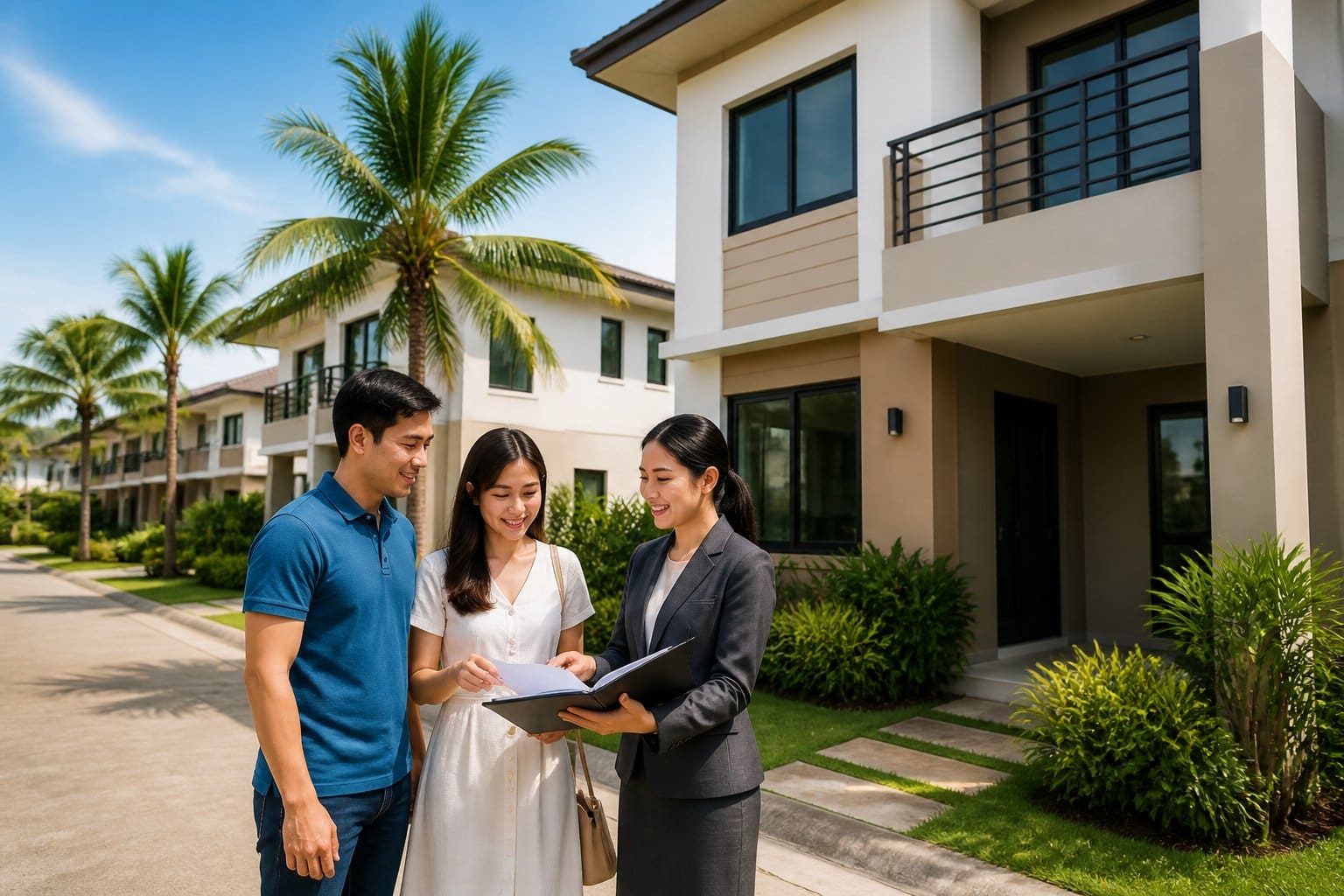
Pag-IBIG financing can be used for several types of residential property in Cebu. However, it is more accurate to say a property may qualify rather than calling every property “Pag-IBIG accredited.”
There is an important distinction here.
Pag-IBIG works with accredited developers, and accredited developers may process qualified buyers through Pag-IBIG’s housing loan system.
An individual house, lot, resale condo, or other privately owned property still needs its own title, legal, and appraisal review.
In other words, developer accreditation and individual property eligibility are not the same thing.
| Property type | Common Cebu locations | Key financing check |
|---|---|---|
| House and lot | Talisay, Cebu City, Mandaue, Lapu-Lapu | Acceptable title, appraisal, property documents, and seller requirements |
| Condominium unit | Cebu City, Mandaue, Lapu-Lapu | Condo title or project documents, appraisal, and legal review |
| Residential lot | Cebu and nearby cities | Residential use, acceptable title, access, and appraisal |
| Townhouse | Cebu City, Mandaue, Talisay, Lapu-Lapu | Title or developer documents, construction status, and appraisal |
Before paying a reservation fee, ask whether the seller or developer accepts Pag-IBIG financing and whether the transaction can meet the Fund’s documentation requirements.
You can browse Cebu Grand Realty’s live houses and lots for sale and condos for sale in Cebu.
Financing still needs to be confirmed for the specific property you choose.
Common Reasons Pag-IBIG Loan Applications Get Delayed or Rejected

A Pag-IBIG application can be delayed or declined when the borrower records, income documents, or property documents do not meet the Fund’s requirements.
Common issues include:
- Incomplete or inconsistent documents: Differences in names, addresses, civil status, employment information, or signatures may require additional verification.
- Problems with membership or existing obligations: Unresolved Pag-IBIG loan issues can affect eligibility.
- Insufficient repayment capacity: The amount requested must be supported by the borrower’s verified income and financial obligations.
- Income that cannot be verified: Missing employment certificates, payslips, tax records, business documents, or OFW income records can delay evaluation.
- Property document problems: Issues involving the title, tax declaration, permits, appraisal, or required seller or developer documents can hold up a Housing Loan.
- Co-borrower documentation issues: Missing IDs, income documents, or other required records can delay the application.
- OFW documentation issues: Applicants working abroad may need additional employment and representative documents depending on their circumstances.
- Delays involving third parties: Sellers, developers, appraisers, insurers, banks, and government offices may also affect the closing timeline.
If Pag-IBIG asks for additional information, respond with complete and readable documents and keep copies of everything you submit.
For the property side of the purchase, Cebu Grand Realty’s first-time homebuyer’s checklist can help you organize the documents and decisions that come before closing.
Frequently Asked Questions About Pag-IBIG Loans in Cebu
Can Cebu residents apply for a Pag-IBIG loan online?
Yes. Members can use Virtual Pag-IBIG to review Housing Loan requirements and start eligible applications online.
You may still need to submit additional property documents or complete other requirements during processing.
What Pag-IBIG loans are available to members in Cebu?
The main Pag-IBIG loan programs are:
- Housing Loan: For buying, building, improving, or refinancing residential property
- Multi-Purpose Loan or MPL: A short-term cash loan for qualified personal or household needs
- Calamity Loan: A short-term loan for qualified members affected by a declared calamity
Pag-IBIG also offers MP2 Savings, but MP2 is a voluntary savings program, not a loan.
How much can a member borrow for housing?
As of 2026, the maximum Pag-IBIG Housing Loan amount is up to ₱10 million per borrower, subject to approval.
The actual amount depends on your income, capacity to pay, credit evaluation, property appraisal, and current Pag-IBIG lending rules.
What is the Pag-IBIG loan interest rate in 2026?
Pag-IBIG Housing Loan rates in 2026 depend on the program and fixing period.
Regular rates may start at around 5.75% per year. Qualified borrowers under a current 2026 promotional program may also qualify for a 4.5% annual rate fixed for three years, subject to program rules and the application deadline.
Eligible socialized housing borrowers may qualify for a subsidized 3% rate.
What are the basic Pag-IBIG loan requirements in the Philippines?
Housing Loan applicants generally need:
- At least 24 posted monthly Pag-IBIG Savings contributions, subject to current rules
- Sufficient and verifiable income
- Valid government-issued identification
- Acceptable credit and Pag-IBIG loan records
- Required property documents
- A property that passes Pag-IBIG appraisal and legal review
Exact requirements vary based on employment status and loan purpose.
Can OFWs apply for a Pag-IBIG Housing Loan?
Yes. Qualified OFW members may apply.
They need acceptable proof of overseas income and other required documents. If someone in the Philippines will act on their behalf, additional authorization documents may also be required.
Does a Pag-IBIG-accredited developer mean the property is automatically approved?
No.
Developer accreditation and individual loan approval are different. The buyer must still qualify, and the property must pass Pag-IBIG’s documentation, legal, and appraisal requirements.
This also applies to resale homes, individual lots, and privately owned condominium units.
What should buyers check before reserving a property?
Before paying a reservation fee, review:
- Your Pag-IBIG membership and contribution records
- Your income and monthly obligations
- The property’s title and ownership
- Tax declarations and real property tax status
- Whether the seller or developer accepts Pag-IBIG financing
- The estimated appraisal and possible equity requirement
- Taxes, registration costs, insurance, and other closing expenses
You should also ask what happens to your reservation fee if your loan is not approved.
For a broader budget check, see the cost of buying a home in Cebu in 2026.
Ready to Look at Cebu Properties?
Getting your Pag-IBIG documents ready is only one part of buying a home.
You also need a property that fits your budget, location needs, financing plan, and the lender’s requirements.
Cebu Grand Realty (PRC License No. 0005735) can help you review available Cebu properties and coordinate the property side of the transaction while Pag-IBIG handles your loan evaluation and approval.
Start by browsing Cebu properties for sale.
If you already have a budget or target area, you can also contact Cebu Grand Realty to discuss suitable listings and the documents you may need before reserving.