
The Best International Schools Near Cebu’s Key Residential Communities
For many families relocating to Cebu, picking the right international school is often the first big decision. Where your kids go to school shapes almost everything else. It affects where you’ll live, what kind of home you’ll choose, and your budget. Whether you’re an expat, a returning OFW, or a local family, the school question usually comes before the housing question.
Cebu’s top international schools are spread across neighborhoods like Talamban, Banilad, Mandaue, and parts of the city center. Each area has its own mix of housing, commute times, and price tags. Knowing which schools are near which neighborhoods will help you narrow down where to live.
This guide matches Cebu’s main international schools with the areas around them. You’ll find info on curriculum, commutes, property options, and what to check before you sign a lease or buy a home.
Key Takeaways
- Cebu’s top international schools are mostly in Talamban, Banilad, Lahug, and Mandaue. Each offers different housing choices and commute times.
- Living near a good school can boost property values and rental demand, so homes in school zones are strong picks for families and investors alike.
- It’s smart to weigh school fit, neighborhood vibe, and property type together—not as separate decisions.
Why School Choice Shapes Home Searches in Cebu
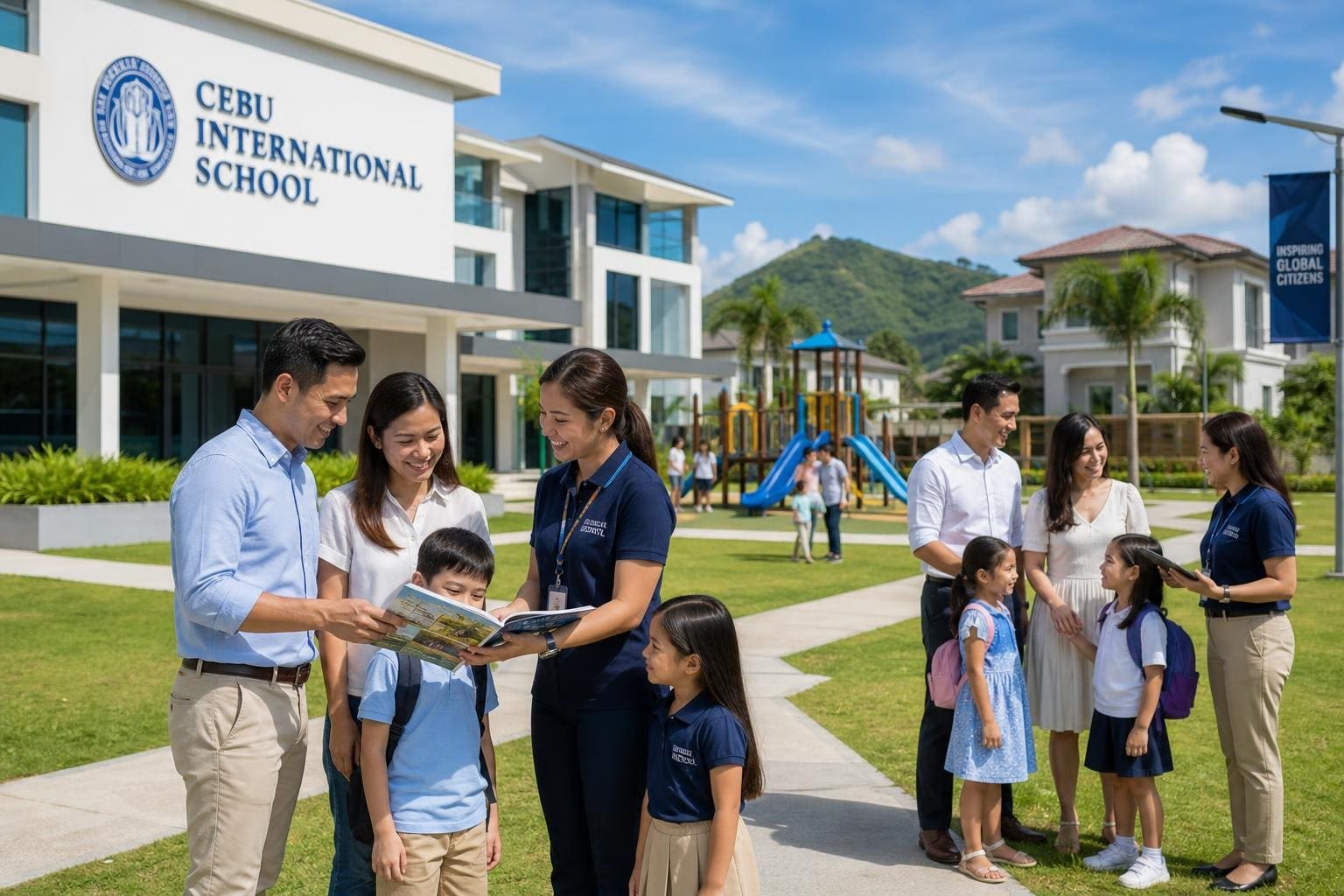
School access is almost always a top factor for families choosing where to live in Cebu. This is true for expats, OFWs coming home, and local buyers who want to be close to schools. Living near a trusted school makes daily life simpler. It also protects your investment and helps anchor your family’s social life in a community.
How School Proximity Affects Daily Family Life
In fact, a short school run can change your family’s day. If you’re within 10 to 15 minutes of campus, you spend less time in traffic. You get more time at work, at home, or just relaxing. In Cebu, morning traffic can be bad. Even living a kilometer closer can save you 20 minutes each way.
Being nearby also makes after-school pickups less stressful. For working parents, that’s a real need—not just a perk.
Why Buyers and Renters Often Choose the School First
Typically, most families pick a school before they start looking at homes. This is especially true for expats who need a specific curriculum, like IB or American programs.
Once the school is picked, consequently, the property search usually focuses on just two or three neighborhoods. That makes everything simpler and saves a lot of time.
How School Access Can Influence Property Value and Rental Demand
Overall, homes close to good schools tend to keep their value better than similar homes farther away. There’s always demand from families with school-age kids. Landlords in these areas often get longer leases because tenants plan around school years.
If you’re investing, a property near Ateneo de Cebu, Cebu International School, or similar schools tends to attract a steady stream of tenants. It can also support higher resale prices down the line.
Top International Schools and the Communities Around Them
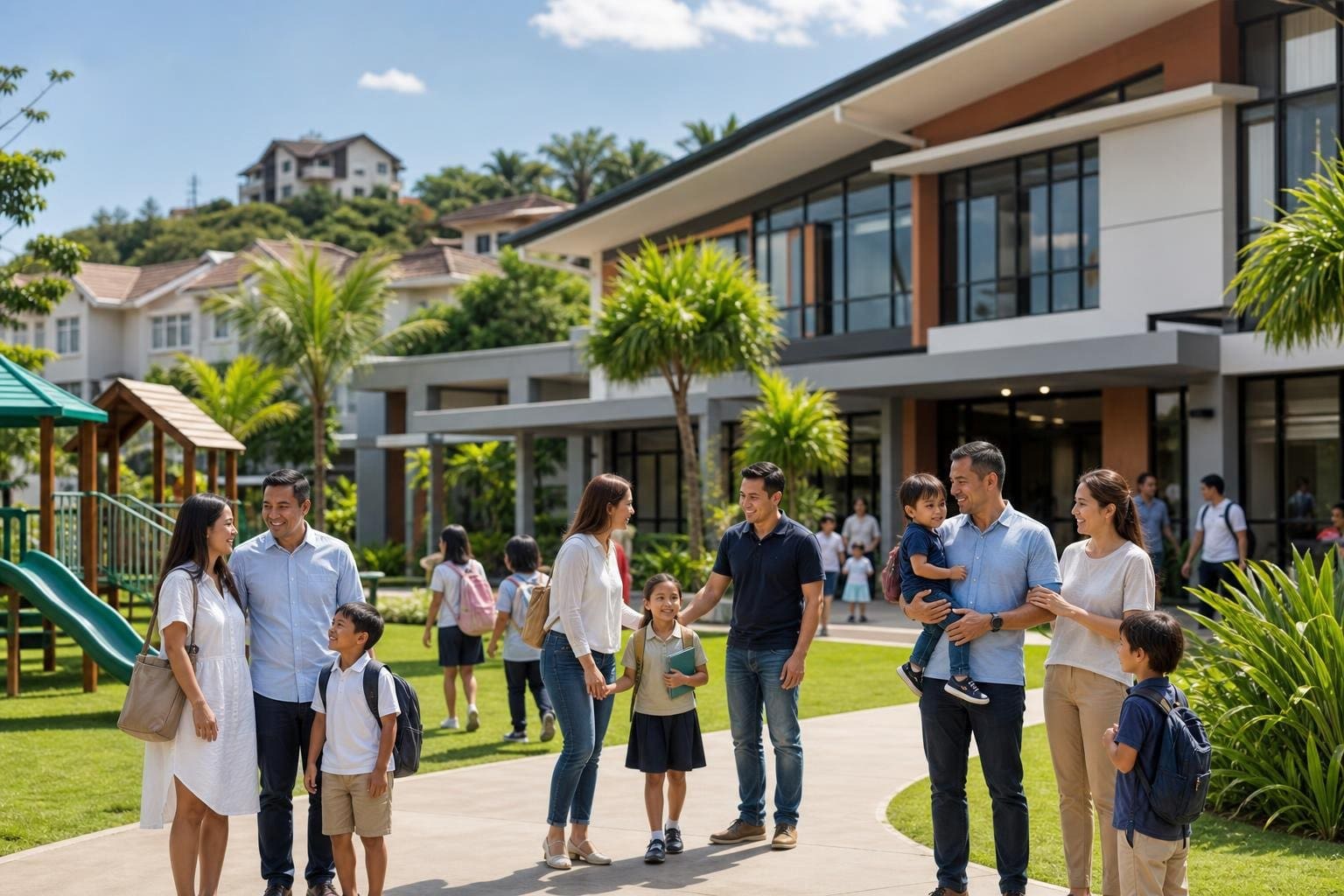
Cebu’s international schools are spread across different neighborhoods. Each area has its own vibe. Cebu International School (CIS) anchors Talamban. Singapore School Cebu and Wesley Primrose Academy draw families to Mandaue and Banilad. Ateneo de Cebu has long shaped demand in the Talamban education belt. Places like Maria Luisa Estate Park are popular with families who want village-style living close to several campuses.
1. Cebu International School and Family Housing in Talamban and Pit-os
Cebu International School is in the Pit-os area of Talamban. It’s north of the city’s main business spots. It’s the only full K-12 international school in Cebu that offers the IB Diploma Programme. CIS has held that status since 1999. The school has a mix of expat, Filipino, and local students.
In addition, the campus is spacious with good facilities and small class sizes. CIS has recently ranked at the top among Cebu’s private schools.
Nearby housing: Talamban and Pit-os have gated villages with bigger, more affordable homes. These are homes you won’t easily find in Cebu Business Park or Lahug. There are also new condos with larger floor plans. Families who want space and a quiet setting often settle here.
2. International School Cebu and Residential Options in Banilad, Lahug, and North Cebu City
International School Cebu (ISC) sits along Banilad Road. It serves kids from preschool to Grade 12, following an international curriculum taught in English. It’s a top pick for expat families and OFWs coming home with kids.
Moreover, the campus is modern. It has science labs, sports facilities, and after-school activities. Class sizes stay small, which is a plus.
Nearby housing: Banilad is a leafy, peaceful area close to malls and restaurants. Lahug is a bit farther south but still an easy drive. Several gated villages in North Cebu City are within 10 to 15 minutes of ISC. Homes here usually give you more space for your money compared to the business district.
3. Singapore School Cebu and Nearby Homes in Mandaue and Banilad
Singapore School Cebu is the first in Cebu to offer both IB and Cambridge programs. It’s an IB World School and a Cambridge International School. Students can choose between two of the world’s top secondary qualifications.
As a result, this is a big draw for families who want options for their kids’ future studies.
Nearby housing: The school’s spot gives families access to both Mandaue and Banilad homes. Mandaue has newer condos and townhouse projects at good prices. Banilad offers established villages and is close to shops and services. If you want curriculum options and a central spot, you’ll probably look here first.
4. Wesley Primrose Academy and Family-Oriented Areas in Mandaue
Wesley Primrose Academy serves families in Mandaue. It offers an international-standard curriculum. It’s a practical pick for those in northern Metro Cebu who want English-medium education. They don’t have to drive into Cebu City every day.
Nearby housing: Mandaue sits between Cebu City and Mactan Island. It’s handy for families with work in both areas. You’ll find mid-rise condos and townhouse communities. Rental demand is steady here, thanks to its location near business and retail hubs.
5. Ateneo de Cebu and the Talamban Education Corridor
Sacred Heart School, Ateneo de Cebu, is one of the region’s most respected schools. It follows the Philippine K-12 curriculum. Its strong academics, solid English instruction, and long track record make it a top pick for professional families, dual citizens, and OFWs.
The campus is in Talamban, in an area packed with other schools and colleges.
Nearby housing: Families here often live in Talamban’s gated communities. You’ll get bigger lots. Some commute in from Banilad or Lahug, and the drive isn’t bad outside rush hour. The Talamban corridor is still growing, and prices are usually lower than in the city center.
Comparing Neighborhoods for School Access and Family Living
Cebu’s main family neighborhoods each offer a different mix. The right spot depends on what you value most. Some families want to be close to campus. Others want city access, a tight-knit community, or the best value for money. Here’s a look at each neighborhood based on the school zones above.
Talamban and Pit-os for Larger Homes and Campus-Like Settings
Talamban and Pit-os are in the north of Cebu City. They’re surrounded by green hills and a growing number of gated villages. This area is great for families who want bigger lots, quieter streets, and a slower pace.
Moreover, both CIS and Ateneo de Cebu are close by. The University of Cebu’s Banilad campus and several other colleges are also nearby. You get a student-friendly vibe with bookshops, cafes, and tutorial centers.
Best for: Families who drive, want more space, and prefer lower costs per square meter.
Banilad and Maria Luisa Estate Park for Established Residential Appeal
Banilad has been a favorite spot for families for years. The area has tree-lined streets, easy walks to Country Mall and Banilad Town Centre, and quick drives to ISC. It’s a great pick for expat and professional households.
Additionally, Maria Luisa Estate Park is right next door. It’s one of Cebu’s best-known gated communities. Homes here are pricey, but you get security, lots of greenery, and a real sense of community. Resale values have stayed steady.
Best for: Families looking for a classic neighborhood, walkable amenities, and steady property values.
Lahug and Cebu IT Park for Condo Convenience and Shorter City Commutes
Lahug and Cebu IT Park are great for families who want condo living. Restaurants, co-working spaces, and shops are right downstairs. The vibe here is more urban and fast-paced than Talamban or Banilad.
ISC is just a short drive from Lahug. If you work in IT Park or Cebu Business Park, you’ll love the short commute to both work and school.
Best for: Working parents in tech or BPO who want a condo close to work and school.
Mandaue for Midpoint Access to Schools, Offices, and Retail
Mandaue City sits between Cebu City and Mactan Island. It’s a central hub. Singapore School Cebu, Wesley Primrose Academy, and Ateneo de Cebu are all within reach. Traffic is usually light.
Furthermore, the waterfront is growing fast, with new shops, restaurants, and residential towers. Condo prices here are usually lower than in Cebu Business Park.
Best for: Families who want quick airport access, work in Mandaue, or want lots of school options nearby.
What Parents Should Check Beyond Distance
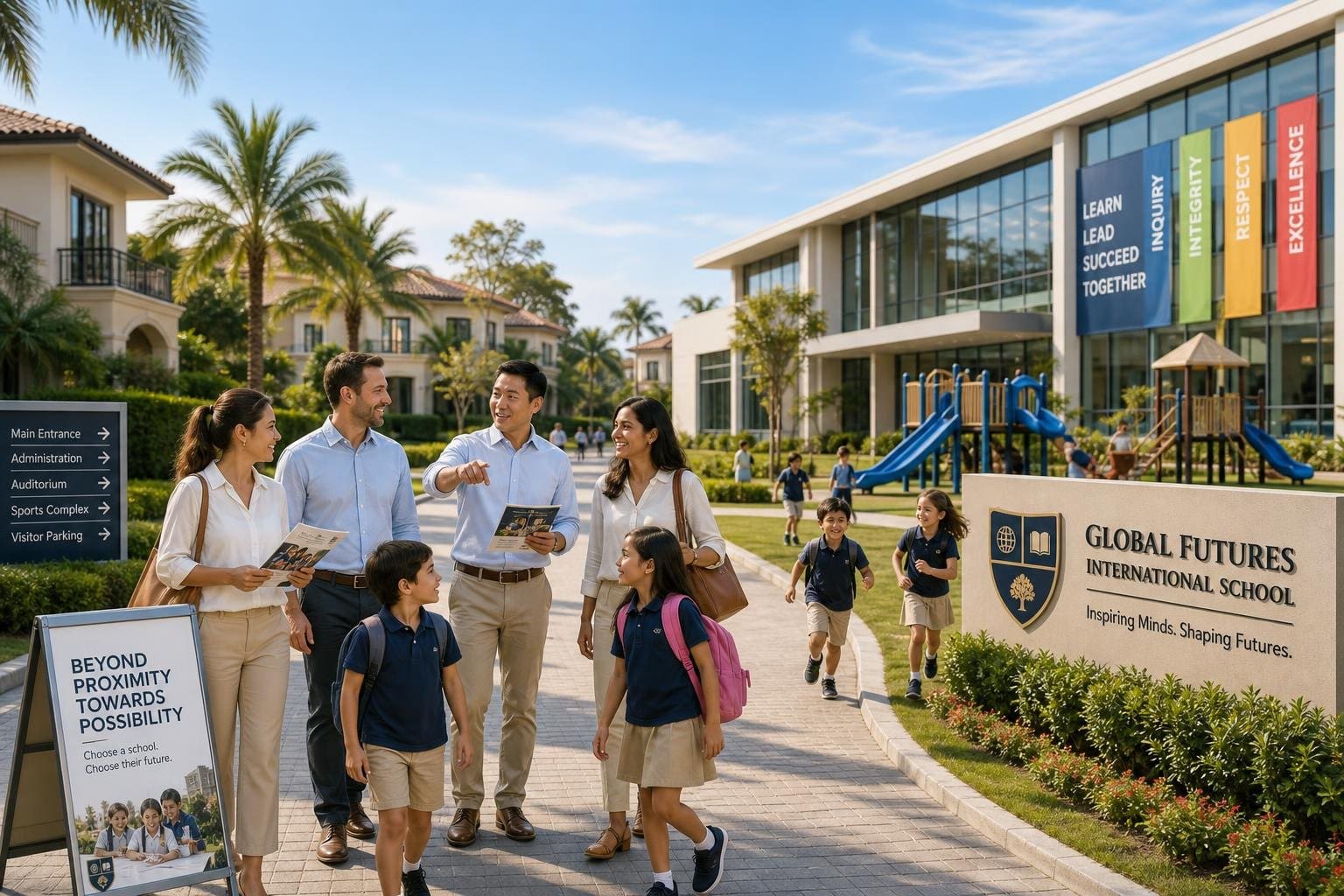
Living near a school is handy, but it’s not the only thing that matters. Parents should also look at curriculum, campus quality, admissions timing, and legal requirements before picking a neighborhood.
Curriculum Options From Early Years to Senior High
Cebu’s international schools offer a mix of academic tracks. Cebu International School uses the IB framework: Primary Years, Middle Years, and Diploma Programme. Singapore School Cebu offers both Cambridge IGCSE and the IB Diploma. Students have two solid options.
Some schools follow American or Philippine K-12 systems with strong English. The right fit depends on your family’s plans. If you might move again, IB or Cambridge credentials are easier to transfer.
Campus Environment, Class Size, and Student Support
Generally, small class sizes are standard in Cebu’s international schools. CIS and ISC both keep student-to-teacher ratios low. Kids get more attention this way.
It’s smart to visit campuses if you can. Check out the play areas, libraries, science labs, and sports spots. Ask about help for students who might need extra support in reading, math, or English.
Admissions Requirements, Entrance Assessment, and Waiting Lists
Most international schools in Cebu ask for an entrance assessment. At CIS, this usually means some academic testing. They also review your child’s past school records.
However, waiting lists are common, especially for mid-year entries or popular grades. It’s best to apply three to six months before you plan to move. Getting a spot before signing a lease or buying a home helps you avoid landing in the wrong school zone.
Visa and Enrollment Considerations for International Families
Foreign nationals enrolling kids in Philippine schools usually need a Special Study Permit (SSP). This is unless the child already has a long-term visa. Processing can take a while, so start early.
Schools like CIS are used to helping international families with paperwork. Ask admissions about visa steps, documents from your child’s previous school, and if you’ll need translations.
Matching Property Types to Different Family Priorities

Of course, your choice of home depends on family size, how long you’ll stay, and what matters most to you. Cebu’s school zones have everything from high-rise condos near IT Park to single-detached homes in Talamban’s gated villages.
Condominiums for Families Prioritizing Urban Access
Condos in Lahug, IT Park, and some of Banilad put families just minutes from ISC. They’re also close to malls. You’ll find studios up to three-bedroom units.
If you have one or two kids, a two- or three-bedroom condo usually works well. Building perks like pools, playgrounds, and study lounges are a plus for school-age children.
Townhouses for Balanced Space and Budget
Townhouses in Mandaue and some parts of Talamban hit a nice middle ground. You get more space than a condo but they’re more affordable than detached houses.
For example, this works well for families needing a home office, a yard for little ones, or an extra room for a helper or visiting family.
Single-Detached Homes Near School Corridors
Gated villages in Talamban, Pit-os, and Maria Luisa Estate Park offer single-detached homes with bigger lots. These are best for families planning to stay for several years.
Homes near CIS and Ateneo de Cebu usually give you more land for your money. If you don’t mind a 15- to 20-minute drive to town, it’s often worth it.
When It Makes Sense to Rent Before You Buy
If you’re new to Cebu or not sure about a school, therefore renting for your first year makes sense. You can test the commute, get a feel for the area, and make sure the school is right before buying.
Cebu Grand Realty’s licensed agents help families look at both rentals and homes for sale across these school zones. They match your short-term needs with long-term plans.
Frequently Asked Questions

Which international schools are closest to Banilad, Lahug, and North Cebu City?
International School Cebu (ISC) is right in Banilad. It’s the closest for families in that area, Lahug, and the northern gated villages. Singapore School Cebu is also easy to reach from Banilad, especially near the Mandaue border. Both are usually a 10- to 15-minute drive if traffic isn’t heavy.
How do ISC and CIS compare in curriculum, grade coverage, and campus facilities?
ISC uses an international curriculum with English as the main language. It serves pre-school to Grade 12. CIS offers the full IB program and covers all grades. It’s the only K-12 IB school in Cebu. CIS has a bigger, open campus in Talamban. ISC’s campus in Banilad feels more urban. Both attract expat and returning Filipino families. CIS tends to draw more students looking for IB credentials that transfer worldwide.
What is the realistic commute time from Talamban, Pit-os, Apas, and IT Park during peak hours?
From Talamban or Pit-os to CIS, it’s usually a 5- to 10-minute drive, even during rush hour. Heading from IT Park to CIS, expect 25 to 40 minutes in the mornings. If you’re coming from Lahug or Apas to ISC in Banilad, you’ll likely spend 10 to 20 minutes at peak times. Test your route on a weekday morning to be sure.
What total annual cost should families budget beyond tuition?
Tuition at Cebu’s international schools varies. Full IB schools like CIS average around PHP 500,000 a year. On top of that, budget 15 to 25 percent more for bus service, uniforms, books, field trips, and activities. For CIS, total yearly costs can reach PHP 600,000 to PHP 700,000 or more, depending on grade and activities.
How early should families apply to avoid waitlists?
Apply at least three to six months before your planned start date. Popular grades at CIS and ISC can fill up fast. Mid-year applicants often face longer waits. Securing a spot before locking in a lease or purchase helps make sure you’re in the right neighborhood.
How does being near a well-regarded school affect rental demand and property value?
Homes close to schools like CIS, ISC, Singapore School Cebu, and Ateneo de Cebu usually attract families looking for longer leases. These tenants often take good care of the place and are more likely to renew. Every year, new families moving in for school keep demand strong. This helps property values stay steady. If you ever want to sell, it’s often easier when your place is near a popular school.