
Foreclosures, Pre-Selling, Or Resale: Cebu Investment Guide
If you’re wondering which is the best way to buy investment property in Cebu, the honest answer is: it depends on what you’re after. You might be comparing Foreclosures, Pre-Selling, Or Resale options to choose the most suitable investment. Someone hoping for rental income next month needs a different strategy from a buyer planning to build wealth over five years on a tight budget.
Cebu’s property market gives you three main ways in: foreclosed properties, pre-selling units, and resale or ready-for-occupancy (RFO) homes. Each one comes with its own price tag, risks, and timeline for returns. The real difference? How they work in real life, not just on paper. That’s what separates buyers who land a good deal from those who get blindsided later.
Before picking a route, every investor really needs to be honest about three things: how much cash is on hand, how long they can wait for returns, and how much hassle—legal or repair-wise—they’re willing to take on.
Key Takeaways
- Foreclosed properties come with the biggest discounts but demand cash on hand and a stomach for title or condition headaches.
- Pre-selling units offer flexible payments and good appreciation potential, but you’ll wait years before seeing rental income.
- Resale and RFO homes cost more upfront but let you move in, rent out, or finance quickly—plus, there’s less drama.
How The Three Property Paths Compare In Cebu
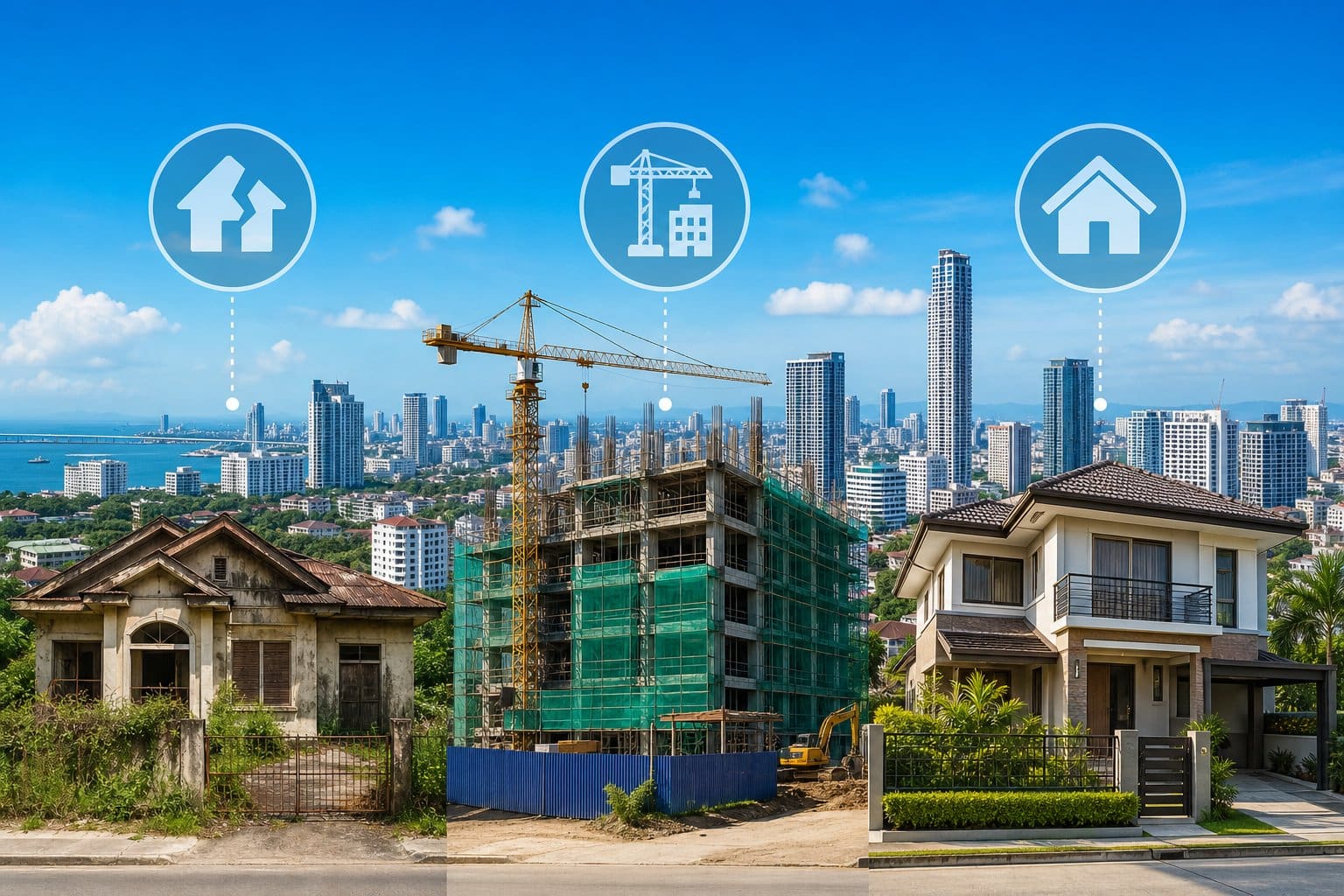
The biggest differences come down to timing and risk. Foreclosed properties are cheapest to buy, but the road to actually using them can be long and bumpy. Pre-selling units let you start with manageable payments and hope for growth. Resale and RFO? You pay more, but what you see is what you get.
What Buyers Mean By Foreclosed, Pre-Selling, And Resale
A foreclosed property is one a bank has repossessed after the borrower defaulted. Banks like BDO, BPI, Metrobank, and Pag-IBIG end up with these and sell them below market to recover losses.
A pre-selling property is sold by a developer before it’s built—sometimes before there’s even a hole in the ground. You pay a reservation fee and then follow a payment plan until the unit is finished.
A resale property is being sold by its current private owner, not a developer. The unit already exists, is titled, and you can move in or rent it out right away. Ready-for-occupancy (RFO) properties from developers are basically the same: finished and ready to hand over.
You’ll find houses and lots under all three categories. A foreclosed house in a Cebu subdivision, a pre-selling house and lot in a new township, and a resale house in an older village—they all fit somewhere on this spectrum.
The Fastest Way To Match A Property Type To Your Goal
| Goal | Best Match |
|---|---|
| Start earning rent as soon as possible | Resale or RFO |
| Lower monthly cost during payment period | Pre-selling |
| Maximum discount at purchase | Foreclosed |
| Lowest legal complexity | Resale or RFO |
| Strongest capital appreciation potential | Pre-selling (growth zones) |
If you need cash flow now, pre-selling just isn’t going to cut it. If you want a clean title and a straightforward process, foreclosures will probably drive you nuts. Matching your goal to the right path is step one—don’t skip it.
Cebu Factors That Change The Investment Math
Cebu isn’t just one market. IT Park, Cebu Business Park, and Mactan pull in BPO workers and expats, so rental demand for condos stays strong. Established villages like Banilad, Lahug, and Mandaue keep their values steady. Further out—Naga, Minglanilla, Danao—you’ll see lower prices, but the rental pool thins out.
In the hottest spots, resale prices are firm and pre-selling units get snapped up fast. In secondary areas, you’ll find more foreclosures and a bit more room to negotiate. Location really shapes which strategy makes sense, sometimes more than anything else.
Pre-Selling For Long-Term Growth

Pre-selling is best if you can wait, have a solid location in mind, and trust the developer. The upfront numbers look good, but the real costs sometimes only show up near turnover.
Why Investors Buy During The Pre-Selling Stage
People jump into pre-selling mainly because prices at launch are lower than at turnover. Developers want to sell early to fund construction, so they offer attractive pricing. If you get in early, you lock in that price and (hopefully) watch your property appreciate as the project moves along.
For a pre-selling condo in a good Cebu spot, the gap between launch price and value at turnover can be significant, especially where new infrastructure is coming in. Some buyers plan to flip the unit at turnover and pocket the appreciation.
Developers usually offer in-house financing during construction, which helps if you can’t get a bank loan yet. Payments are stretched over two to five years, so it’s manageable for a lot of buyers.
Payment Structure, Reservation, And Turnover Costs
Here’s how payments for pre-selling units usually break down:
- Reservation agreement: A small upfront fee, usually between PHP 10,000 and PHP 50,000, holds the unit.
- Downpayment period: 10-30% of the price, paid monthly over one to three years.
- Balance: Paid via bank loan, in-house financing, or spot cash at or near turnover.
The Contract to Sell comes after the reservation and lays out the payment schedule, late penalties, and what the developer promises to deliver.
When turnover comes, extra costs often pop up. Transfer fees, move-in charges, association dues in advance, and fit-out for bare units can add up fast. A bare pre-selling condo might need PHP 300,000 or more just to make it livable or rentable.
Main Risks To Check Before You Commit
Construction delays are a constant headache for pre-selling buyers in the Philippines. Stick with developers who’ve actually finished projects in Cebu—you can check their track record. Don’t skip confirming the project’s HLURB or DHSUD registration and looking into their delivery history.
Developer risk is no joke. If it’s a smaller or newer developer with no completed Cebu projects, you’re taking a bigger gamble. Always make sure there’s a License to Sell before signing anything.
Pre-selling house and lot deals carry similar risks. Land titling, subdivision approvals, and utilities might not be ready by the promised turnover date. Spot cash buyers sometimes get a better price, but the delivery risk is still there for everyone.
Foreclosures For Discounted Entry Prices

Foreclosed properties attract buyers who have cash ready and patience for a messier process. The discount is real, but so are the headaches.
Where Foreclosed Deals Come From
When someone stops paying their loan, the bank (or Pag-IBIG) starts the foreclosure process. Once it’s done, the lender owns the property and lists it for sale to recover what’s owed.
In Cebu, banks post their foreclosed listings online and hold public auctions now and then. BDO, BPI, and Metrobank all have active lists. Pag-IBIG has its own set of properties for qualified buyers.
Foreclosures in Cebu cover a lot of ground: condos in IT Park and Cebu Business Park, houses and lots in subdivisions, commercial spaces, even vacant land. Defaults happen at all price points.
The Real Upside Behind Below-Market Pricing
The main draw? Price. Foreclosed properties can be 20–40% cheaper than current market value. If you pay spot cash, that’s instant equity. If you fix up and rent the place, your yield is better than you’d get buying at full price.
Especially in Cebu’s high-demand areas, this matters. A foreclosed condo near a BPO hub that rents at market price but was bought cheap means stronger cash returns. Bank financing for foreclosures is tougher to get, though some lenders might offer it case by case.
As-Is Risks, Occupancy Issues, And Extra Costs
All foreclosed properties are sold as-is. Banks don’t guarantee anything, and you might not even get to inspect before buying. Some buyers have walked into places with water damage, missing wiring, or pest problems.
Occupancy is another snag. Some foreclosed homes are still lived in by former owners or tenants. Getting them out can take months and might need a court order.
Unpaid dues are common, too. Any back association fees, property taxes, or utility bills stick to the property. You’ll need to settle these before the title can be transferred. Smart buyers always factor these extras into their offer before bidding.
Resale And RFO For Immediate Use Or Cash Flow

Resale and RFO properties are generally safer bets for investors, but you’ll pay the going market rate—no foreclosure discounts, no early-bird pre-selling prices.
Why Completed Units Appeal To Income-Focused Buyers
The big draw? Speed. Buy a resale condo or RFO house and you can have it earning rental income within weeks. For investors who need cash flow, that’s not just a perk—it’s the main reason.
RFO units from developers come with the comfort of everything being brand new, plus warranties on major defects. No nasty surprises. Resale places might need a little sprucing up, but at least you get to see exactly what you’re buying before you sign anything.
Financing is usually more straightforward on completed, titled properties. Lenders like having a clear asset to secure the loan. Pag-IBIG is popular too, especially for houses and lots in this bracket. The whole process is less stressful, which matters a lot if you’re buying from abroad or it’s your first time.
What To Inspect Before Closing A Deal
Before you commit to a resale unit, walk through the property and check for water leaks, plumbing, the age of the electrical panel, and any signs of settling. For older Cebu buildings, it’s smart to ask about post-earthquake inspections, especially after 2013.
Always check the Transfer Certificate of Title (TCT) at the Registry of Deeds. It should be clean—no liens, encumbrances, or legal issues. Get a licensed broker or real estate lawyer to verify this before any money changes hands.
Also, confirm in writing that the owner is up to date on association dues and there are no unpaid fees or special assessments hanging over the property.
When Resale Beats Buying From A Developer
Resale makes sense when location trumps everything else. In Cebu’s established towers—think IT Park or Cebu Business Park—a well-kept resale unit can get you rental income almost immediately. No waiting years for construction. For OFWs who need the property to start working right away, it’s often the smarter move.
Financing, Taxes, And Legal Checks That Affect Returns

Buying property in Cebu isn’t just about the sticker price. Financing, taxes, and legal checks all eat into your returns. Overlooking these extra costs is a classic rookie mistake.
Comparing Cash, Bank, And In-House Financing
Spot cash gives you the most leverage and skips interest costs. Sellers—especially on foreclosures or resale—often move faster for cash.
Bank financing (including Pag-IBIG) is for completed, titled properties. Terms usually run up to 20 years, but rates vary a lot. It’s worth shopping around—compare at least two or three banks before you decide, because a small difference in rates can mean a lot over time.
In-house financing is common for pre-selling units. Rates are higher, but you don’t need bank approval right away. Once the unit is turned over, most buyers either refinance with a bank or pay the rest in cash if they can swing it.
Titles, Ownership Documents, And Due Diligence
The Transfer Certificate of Title (TCT) is the main proof of ownership for any completed property. For condos, it’s called a Condominium Certificate of Title (CCT).
With pre-selling, you’re working off a Contract to Sell until turnover. Make sure the developer actually owns the land and has a clean title before you pay anything. A reservation agreement just gives you the right to buy—it’s not ownership.
Doing your homework means checking zoning, making sure the property isn’t affected by road widening or easements, and verifying all taxes are paid. Having both a licensed broker and a real estate lawyer on your side is a good idea.
Taxes, Dues, And Local Compliance Costs
Here are the main taxes you’ll run into when buying property in the Philippines:
- Documentary Stamp Tax (DST): 1.5% of the higher of selling price or zonal value.
- Transfer Tax: Local rates vary; in Cebu City, about 0.75%.
- Registration Fee: Based on property value, paid at Registry of Deeds.
- Capital Gains Tax (CGT): 6% of selling price or zonal value, usually paid by the seller.
Real property tax (RPT) is due every year and is based on the property’s assessed value. Once you buy, you’re on the hook for it.
Association dues for condos and subdivisions are monthly and can range from PHP 3,000 to over PHP 10,000 in high-end Cebu projects. These aren’t optional, so include them in your rental yield calculations.
Choosing The Best Fit For Your Investor Profile

There’s no single “best” way to invest in Cebu property. It really depends on your budget, timeline, and what you want the property to do for you. Each approach has its place in a solid portfolio.
Best Option For Budget-Conscious Buyers
If you’re short on cash but have time, pre-selling is usually the easiest entry point. Payment terms are stretched over the build period, so you don’t need a huge lump sum upfront like you would with a resale.
Foreclosures can be bargains, but only if you’ve got enough cash for both the purchase and repairs. A cheap foreclosed unit that needs PHP 500,000 in fixes and months of paperwork isn’t really cheap when all’s said and done.
Buying pre-selling in a promising Cebu location can pay off over three to five years, but it’s not about just picking any pre-selling unit—it’s about choosing the right developer and project at the right time.
Best Option For Rental Income And Faster Payback
If rental income is your goal, start with a resale or RFO property. You can’t rent out a pre-selling unit that’s still under construction—obviously.
Resale units in hot Cebu spots—near BPOs, universities, the airport—often have tenants waiting. Buy right, and you might have rental income coming in from day one.
Brand new RFO units can command higher rents, too. Plus, financing is cleaner, you get faster occupancy, and maintenance is low at the start. For investors who want their money working quickly, RFO is hard to beat.
Best Option For Lower Risk Versus Higher Upside
Resale and RFO are lower risk. What you see is what you get. Prices are fair, legal stuff is simpler, and getting a loan is more straightforward.
Foreclosures? High risk, high reward. If you know what you’re doing and have cash and connections, you can do well. But if you’re new to this or have never dealt with title issues in the Philippines, it’s probably not the place to start.
Pre-selling sits in the middle. Moderate risk, decent upside, but you’ll wait a while before seeing returns. For OFWs who don’t need immediate cash flow, pre-selling from a solid Cebu developer is a proven path. Many seasoned investors actually hold all three types, using each for its own strengths.
Frequently Asked Questions

What are the biggest risks to check before buying a bank-owned property in Cebu?
The top risks: title problems, property condition, and whether it’s occupied. Always check the title at the Registry of Deeds, budget for repairs, and find out if someone’s still living there. Unpaid association dues or real property taxes can end up on your tab if you’re not careful.
How long does it usually take to take possession of a foreclosed unit after purchase?
It typically takes three to six months to get possession of a foreclosed unit. If someone’s still living there, eviction can drag it out even longer. Factor in time for title transfer and clearing any unpaid dues before you can actually use the property.
What factors should I evaluate to choose a reliable developer for a pre-selling condo in Cebu?
Look for a developer with a track record of finished projects in Cebu. Check if they’ve delivered similar buildings on time, make sure the project has a valid DHSUD License to Sell, and see what past buyers say about them. Well-known developers with multiple completed buildings are a safer bet than newcomers.
What costs should I budget for at turnover when buying a pre-selling unit?
Besides the last payment, set aside money for transfer fees, Documentary Stamp Tax, advance association dues, and fit-out if the place is bare. Outfitting a unit—flooring, lights, fixtures, kitchen—can easily run PHP 300,000 to PHP 700,000 or more. Sales teams almost never mention this upfront.
How can I estimate rental income and vacancy risk for an investment property in Cebu?
The simplest way is to check current rental listings in the same or nearby buildings. Compare asking rents to your total costs—dues, taxes, loans, management fees. Vacancy risk is lower near BPOs, schools, and the airport, but higher in areas with lots of new supply coming online.
Which option typically offers the best balance of cash flow, capital appreciation, and risk for my timeline?
If you’re just starting out in Cebu, grabbing a resale or RFO unit in a popular area usually hits that sweet spot: it brings in steady cash flow, is easier to finance, and tends to grow in value at a comfortable pace. Pre-selling? That’s more for folks who can wait about five years and aren’t counting on rental income right away. Foreclosures can be tempting if you’ve got experience, plenty of cash, and a high tolerance for risk—but honestly, they’re probably not the best jumping-off point for most buyers new to Philippine real estate.