

5 Ways the BPO Industry Is Changing Where People Choose to Live in Metro Cebu
Over 200,000 people work in BPO and IT-BPM jobs across Metro Cebu. The growth of the BPO industry Cebu has experienced in recent years is not just an employment story. In fact, it is a residential demand engine. This engine shapes which neighborhoods fill up first, determines which corridors attract new condo towers, and decides which fringe areas become viable alternatives to premium addresses.
Where a BPO office opens, housing demand follows. This is one of the most reliable signals in Metro Cebu real estate. As a result, this pattern has repeated across Cebu City, Mandaue, Lapu-Lapu, and Talisay for over a decade. Those who track it get an early read on where values will move.
This article covers five ways BPO jobs are changing where people live in Cebu. Each shift matters for buyers, renters, and investors right now.
Key Takeaways
- Night-shift commute safety has replaced school proximity as the top location factor for a large and growing segment of Metro Cebu renters.
- BPO salary bands create layered residential demand across multiple corridors simultaneously, from IT Park towers down to fringe Lahug and suburban Consolacion.
- Hybrid work schedules have made suburban corridors in Talisay, Liloan, and Consolacion competitive with central addresses for the first time.
1. Why Office Location Now Shapes Housing Demand
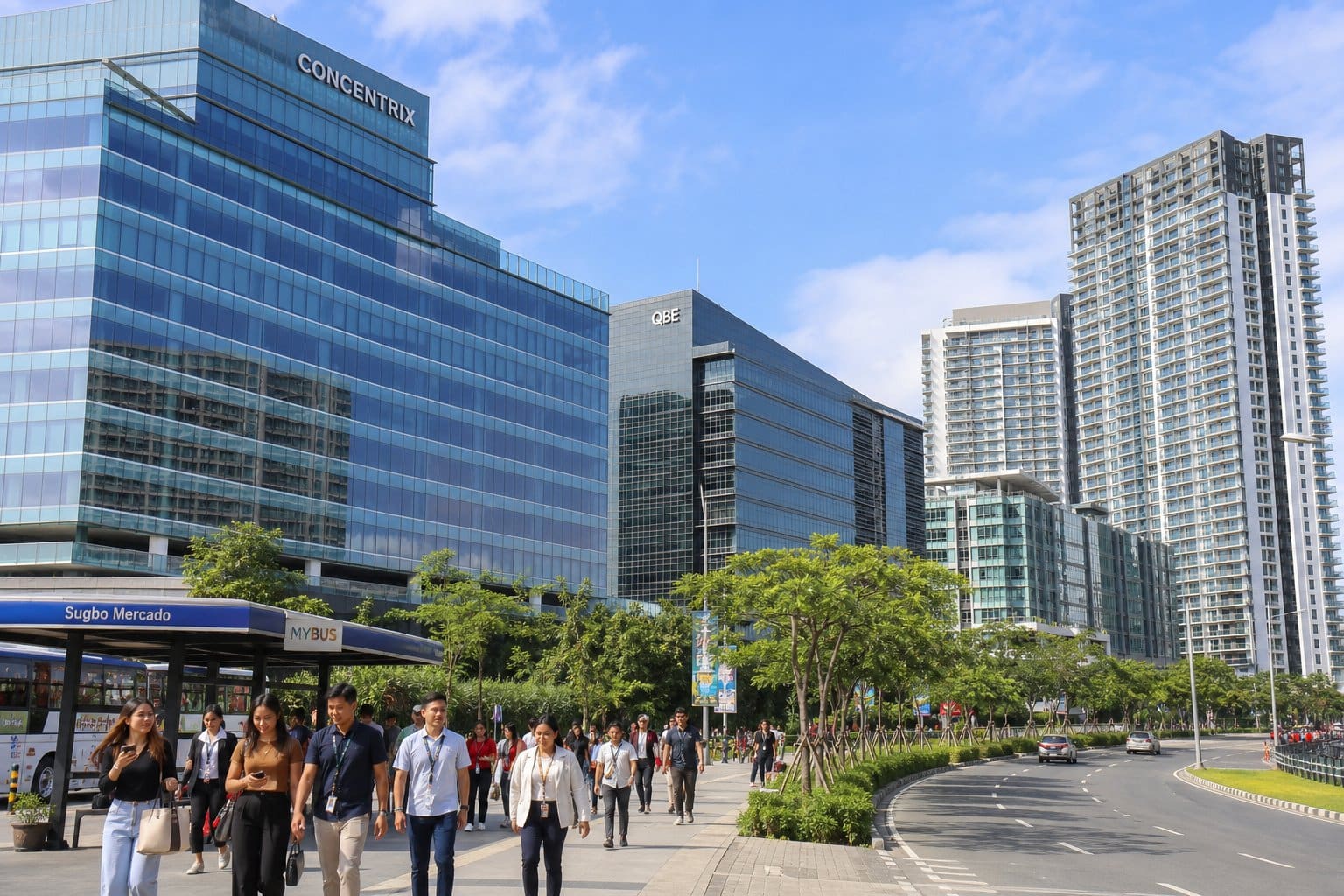
The CX industry has changed how Metro Cebu renters think about location. BPO companies in Cebu run on US and European time zones. As a result, a large share of the workforce commutes at 9pm and walks home at 6am. They sleep while most of the city is active. For those workers, the standard location checklist no longer applies.
School district access, proximity to malls, and daytime transit options matter far less. Instead, what matters is a tighter set of needs: short commute time, commute safety after midnight, and walkability to the office. A 10-minute walk to work at 3am is worth paying for. In contrast, a 45-minute car ride at that hour is not acceptable, regardless of price.
This has pushed condo demand toward IT Park in Lahug and Cebu Business Park. Both zones anchor housing supply because BPO employers are concentrated there. Customer experience operations started in those two hubs two decades ago. They have since built a permanent housing premium in their immediate perimeters.
A unit near an active BPO office cluster comes with a stable tenant base. As a result, it is largely insulated from seasonal cycles. BPO employment does not follow school calendars or holiday patterns. Occupancy in well-located BPO-adjacent buildings is more stable year-round. However, buildings that rely on other tenant profiles tend to fluctuate more.
Proximity to an active office cluster is now a core factor, not a secondary one.
2. How Demand Is Spreading Beyond IT Park And Cebu Business Park

IT Park and Cebu Business Park set the benchmark. However, the BPO footprint across Metro Cebu is now wider than most investors track. Regional BPO expansion has driven growth in Iloilo, Bacolod, Clark, and Davao. The same trend is also reshaping how Cebu’s own market distributes demand internally.
Newer and smaller BPO operations are moving away from high lease rates in central Cebu. The SRP corridor in south Cebu has absorbed BPO leases in recent years. So have Mandaue City along the national highway and Mactan near MEPZ. Each of those office clusters creates housing demand within 12 to 24 months of opening.
In Mandaue, BPO growth has pushed housing demand into new areas. Tipolo, Subangdaku, and the Manthor corridor have all seen more activity. These are not traditional condo markets. However, that is changing. Mandaue-based BPO workers now choose nearby addresses. Longer commutes from the city center are no longer worth it.
Similarly, the SRP corridor tells a story of change. SRP office workers have driven demand for condos along the Talisay coast. Purchase prices in these areas are lower than central Cebu. As a result, rental yields in some fringe clusters have outperformed central units. Lower purchase costs keep the returns attractive even with similar occupancy rates.
For investors comparing corridors in Metro Cebu, the rule is simple: follow the office leases. When a BPO firm takes new office space outside the main hubs, take note. Watch the housing market within 2 kilometers. That is where demand moves next. In fact, Metro Cebu’s geography makes this pattern easier to read than in Metro Manila.
3. Why Salary Bands Are Supporting The Mid-Range Condo Market

The BPO sector in Cebu does not have a single salary level. The sector has four distinct pay tiers. Each tier rents and buys in a different part of Metro Cebu.
Entry-level agents earn PHP 18,000 to PHP 25,000 per month. As a result, they typically share units or rent basic condos in Talamban and Basak. Those earning PHP 30,000 to PHP 50,000, however, rent solo in fringe Lahug or Banawa. Senior managers earning PHP 60,000 and above rent in IT Park towers. Some of them also buy units in those same buildings.
This layered structure is what makes Metro Cebu’s condo market more resilient. No single price point captures the whole BPO workforce. As a result, IT Park, Talamban, and Basak each have a pay tier to fill them.
The mid-range segment has been the clearest beneficiary. For example, studios and one-bedroom condos in Lahug, Apas, and fringe Guadalupe are moving consistently. Prices range from PHP 2.5 million to PHP 4.5 million. These units appeal to earners in the PHP 30,000 to PHP 50,000 range. Many of them are ready to buy their first property. Consequently, developers have responded by prioritizing this band in recent project launches.
Over recent cycles, mid-range BPO condos have beaten the premium segment on capital gains. This holds for buyers with a 5 to 7 year horizon. A deep buyer pool and stable occupancy make the risk profile more manageable.
4. How The 24-Hour Work Cycle Changes What Counts As A Good Location

The CX and contact center workforce in Cebu operates on a non-standard clock. When a BPO worker finishes a shift at 6am, their needs are very specific. They need a safe walk home. Food that is open is also a must. A building that does not feel empty at that hour is equally important.
IT Park delivers this reliably. The area has 24-hour food options, multiple convenience chains, and gyms with early-morning hours. Furthermore, security is built for a population that keeps non-standard hours. This evolved because BPO worker density created demand for those services, and businesses responded.
Areas without this setup do not attract BPO renters at the same rate. However, price alone does not close that gap. A quiet area where nothing is open after 10pm is a poor fit for night-shift workers. Some condos in Cebu are well located for daytime life. As a result, they consistently underperform on rental occupancy because they serve one schedule and not the other.
Before you buy a rental condo in Metro Cebu, walk around the area at midnight. Check what is open. Also note how well lit the street is. Then try getting food or transport at 3am. That test tells you more about BPO tenant appeal than school proximity ever will.
Buildings that score well on 24-hour livability keep BPO tenants longer and at higher rent. Those that do not will always need to discount to compete.
5. Why Hybrid Work Is Lifting Suburban Cebu
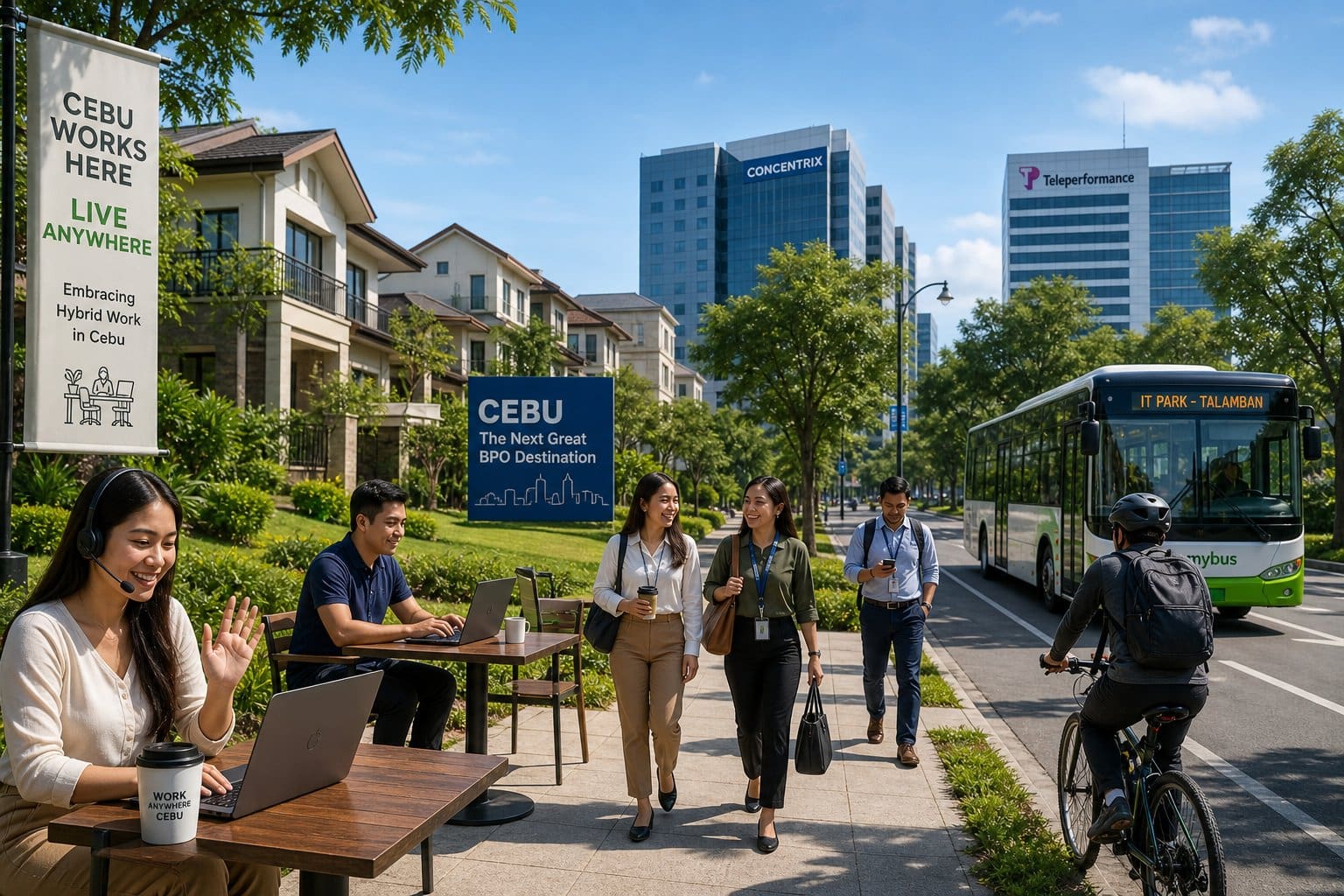
Hybrid work arrived later in the BPO sector than in other industries. Security rules and client needs kept most BPO firms on five-day schedules for longer. As a result, flexible work was the exception, not the standard.
That has changed. Some BPO firms now run on two-to-three day office schedules. New tax laws have pushed more BPO operators to change how they deploy staff. The CREATE MORE Act is a key driver. Data analytics and higher-value IT-BPM roles are at the center of this shift.
A worker who only goes to IT Park twice a week now has new options. For example, Consolacion, Liloan, or Talisay all become realistic. The unit is larger, quieter, and cheaper. The commute trade-off is fine when office days are limited. Before 2020, this did not work for most BPO workers. Now, however, it does for a growing segment.
New builds in Consolacion and northern Mandaue now include co-working spaces. Fast fiber internet and 24-hour security are also standard. These are direct signals that developers are competing for the hybrid BPO worker tenant.
House and lot subdivisions in Talisay and Liloan now compete with condos for BPO renters. This was not possible under a five-day office schedule. If you invest in suburban projects, the key filter is road access. A suburban property needs fast, reliable access to IT Park or Cebu Business Park. That access on office days makes it competitive for this tenant segment.
What Buyers, Renters, And Investors Should Watch Next

Cebu remains the top office destination outside Metro Manila. Colliers Philippines has confirmed this position through recent quarters. Office vacancy in Cebu has dropped below 20 percent. This is the first time since the pandemic. Large BPO transactions and expanded leases drove that improvement. As a result, tighter supply now affects housing demand near new office buildings.
The Contact Islands 2025 event confirms continued BPO investment in Cebu. CCAP signals point in the same direction. Sector leaders say Cebu’s talent pool and lower costs are why BPO operators keep coming. They see few reasons to look elsewhere.
Three areas lead BPO expansion right now: SRP, Mactan, and the Mandaue reclamation zone. These corridors are where office lease announcements are most likely to trigger housing demand shifts. The time frame is 12 to 18 months. Want to invest next in Metro Cebu? Watch these three areas closely.
For renters, buildings near active BPO clusters are built for BPO tenants. That means stronger security and better building management. Round-the-clock amenities also benefit all residents, not just night-shift workers. As a result, buildings in BPO corridors tend to be better managed. Common areas are cleaner. Upkeep is more consistent.
For investors in Metro Cebu, BPO tenants are more stable than tourism or seasonal markets. When BPO employment grows, condo occupancy in BPO corridors rises. In fact, that has held across Metro Cebu for 15 years. Our agents cover Cebu City, Mandaue, Lapu-Lapu, and Talisay. We can therefore help you cross-check corridor data before you commit to a purchase.
Frequently Asked Questions

Which Metro Cebu Neighborhoods Consistently Attract the Highest Rental Demand From BPO Employees?
IT Park in Lahug and Cebu Business Park consistently lead rental demand from BPO workers. Secondary demand is strong in Apas, fringe Lahug, Talamban, and Basak in Lapu-Lapu City. The SRP corridor in south Cebu also absorbs demand that the primary zones cannot meet at lower prices.
How Quickly Do Residential Prices and Rents Typically React After a New BPO Office Cluster Opens Nearby?
Residential demand in Metro Cebu typically rises after a new BPO office cluster opens nearby. The lag is usually 12 to 24 months. This reflects how long workers take to settle and look for nearby housing. As a result, investors who track office lease news can position themselves ahead of that shift.
What Location Factors Matter Most to Night-Shift Tenants When Choosing a Condo or Apartment?
Night-shift BPO workers prioritize short walking distance to the office. They also need 24-hour food and stores nearby. In addition, commute safety at non-standard hours is a key factor. Building security for round-the-clock foot traffic matters too. Price matters. However, it does not override these needs for a worker finishing at 5am.
Which Emerging Corridors Outside the Main Business Districts Offer Strong Rental Yield Potential for Landlords?
Three corridors stand out right now. These are SRP in south Cebu, the Mandaue MEPZ zone, and Mactan near the airport. Furthermore, lower purchase costs in these areas mean rental yields can beat premium addresses. This holds even with similar occupancy rates. Suburban Consolacion and Liloan are also gaining traction among hybrid BPO workers.
How Do Different BPO Salary Bands Influence the Type of Housing People Rent or Buy Across Metro Cebu?
Entry-level agents earn PHP 18,000 to PHP 25,000. As a result, they typically share units or rent basic condos in Talamban and Basak. The PHP 30,000 to PHP 50,000 earners, on the other hand, rent solo in fringe Lahug or Banawa. Some begin buying in that corridor too. Those earning above PHP 60,000 rent or buy in IT Park towers.
How Is Hybrid Work Changing Housing Demand in Suburban Areas, and What Should Buyers Watch For?
Two to three office days per week has opened up suburban Cebu. Consequently, areas like Consolacion, Liloan, and Talisay are now viable for BPO workers. Previously, these workers needed to live near IT Park. The key variable for buyers, however, is road access. Projects with fast routes to the main BPO hubs can capture this tenant segment. Those without reliable access cannot.