

Cebu Rental Yield Report 2026: Gross and Net Yields by Area
If you’re thinking about a Cebu condo purchase for rental income, one number really matters: yield. But here’s the thing—it’s easy to get that number wrong. A listing might promise 7%, but after you tally up the real costs, you might be looking at 5% instead.
Cebu real estate tends to reward buyers who look past the shiny headline percentages. The best-performing properties aren’t always the ones with the highest advertised yield—they’re the ones where gross and net numbers are close together. That gap? It’s a quick way to see how much costs, vacancy, and tenant turnover will eat into your return. This report dives into gross and net yields across Metro Cebu’s main districts, compares unit types, and looks at the demand trends shaping rental income in Cebu through 2026 and beyond. If you treat yield as a risk-adjusted number, not just a marketing pitch, you’ll make smarter decisions.
Key Takeaways
- Net yield, not gross yield, is what you actually take home after costs.
- Mid-size condos in established urban areas usually beat smaller units and large, cost-heavy homes.
- Location-specific costs and tenant depth explain why two Cebu properties with similar prices can deliver very different returns.
How Gross and Net Yield Differ

Rental yield is just how much a property pays you each year compared to what you paid for it. Sounds straightforward, but the details really matter.
Gross rental yield is just annual rent divided by purchase price. No deductions, no vacancy, nothing subtracted. It assumes your unit is rented out every single month.
Net rental yield is what you actually get. It subtracts the real costs of owning and renting out the unit, like:
- Monthly association or condo dues
- Yearly property taxes
- Property management fees (if you use an agent)
- Furnishing costs, averaged over time
- Vacancy—those months your place sits empty
In Cebu, gross and net yield are usually separated by 1.5 to 2 percentage points. So, that 7% gross yield? Realistically, it’s closer to 5% net. Some high-end areas see an even bigger gap once you factor in higher dues and vacancy.
Monthly rent is where it all starts, but it’s only meaningful once you know what comes out of it. If you just look at gross yield, you might end up with a property that looks great on paper but disappoints later. Always chase down the net figure—or better yet, crunch it yourself before you commit.
2026 Yield Benchmarks Across Metro Cebu
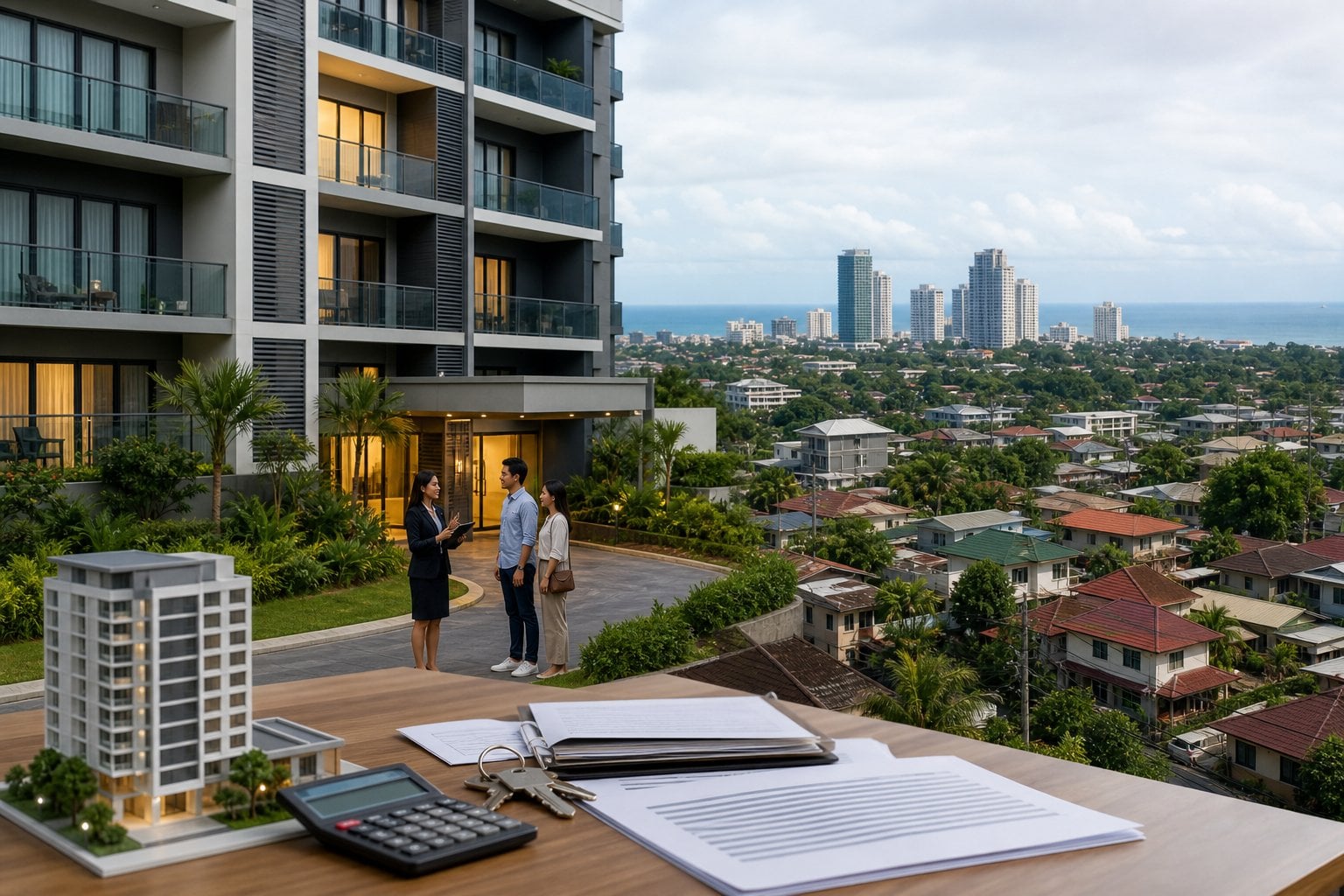
Metro Cebu isn’t just one market. It’s a patchwork of smaller markets, each with its own price points and rent demand. Cebu City sits somewhere in the middle, with an average gross yield around 4.9%, based on Global Property Guide numbers and Lamudi listings.
Mandaue City is a bit of a value spot. Prices per square meter are lower than Cebu City, but rents hold up well thanks to its central location and easy access to both Cebu City and Mactan. That mix pushes Mandaue’s net yield to roughly 5.5%—one of the strongest in the region.
Lapu-Lapu and Talisay are more mixed. Lapu-Lapu gets a boost from Mactan’s tourism and resort demand, which helps gross yield, but seasonality and higher furnishing costs cut into net returns. Talisay’s a smaller rental market, with fewer condos and not much comparable data.
Consolacion is starting to pop up as Cebu City gets denser and new supply spreads outward. Yields there are tough to benchmark since the inventory’s still growing.
Colliers Philippines expects Cebu and Davao to absorb more than 60% of about 45,000 new condo units between 2026 and 2029. That’s a lot of new supply, and it raises some questions about oversupply in certain spots, especially where new towers cluster together. It’s not going to hit every neighborhood the same way, but it’s a reminder to stick with areas that have proven tenant demand instead of chasing the next big thing.
Area Comparison: Income, Demand, and Trade-Offs

Every part of Metro Cebu trades yield for something—could be prestige, tenant stability, or just being close to jobs. Lining them up side by side shows where the real trade-offs are.
Cebu IT Park is probably the cleanest income play here. A 2-bedroom unit costs about ₱11.5M and rents for ₱68,000 a month, giving you around 7.1% gross and 5.2% net yield. Demand comes from BPO workers and IT firms, and it’s stayed steady even as some other areas have cooled off a bit.
Cebu Business Park and Ayala Center Cebu are more about liquidity and brand. Yields are lower, though. A similar 2-bedroom at ₱12.8M rents for about ₱65,000, which works out to 6.1% gross and 4.1% net. You pay extra for the address—no surprise there.
Lahug, Mabolo, Banilad, and Guadalupe are a solid mid-tier group, each with 2-bedroom net yields between 5.0% and 5.4%. These spots have good transport and attract both local and expat renters. Talamban and Fuente Osmeña near Capitol Site look similar, with Fuente’s 2-bedroom net yield at about 5.2%.
Mactan, Mactan Newtown, and the larger beachfront zone near the airport sometimes post the highest gross yields—above 7.5%. That’s mostly tourism and short-term demand. But with seasonality and higher upkeep, net yield drops back to roughly 5.1% to 5.2%.
Maria Luisa and areas near south road properties swap yield for prestige. Big homes there rent for a lot, but high purchase prices drag net yield down to 2% to 3%, some of the lowest in Metro Cebu. Mandani Bay is still building its track record, so it’s tough to say much about long-term yield there yet.
Which Unit Types Produce the Strongest Returns

Unit size really changes the numbers. Smaller units cost more per square meter, and bigger ones often don’t earn enough extra rent to make up for their price.
Two-bedroom units pretty much perform best in most Metro Cebu districts. They’re not too expensive to buy, and there’s solid demand from young professionals, small families, and people sharing.
One-bedroom units can post decent gross yields in some places but usually fall behind 2-bedrooms on net yield, since the price per square meter is higher for smaller spaces.
A few things to keep in mind before you buy:
- Two-bedroom units in Cebu IT Park, Guadalupe, and Mandaue have some of the highest net yields—usually 5.2% to 5.5%.
- Larger 3-bedroom homes and townhouses often come with higher maintenance and furnishing costs that eat into net yield, even if the rent looks tempting.
- Building quality and management matter for both vacancy and resale. A well-run building keeps units filled and holds value much better.
- Long-term rentals to working professionals are usually more stable than short-term rentals, which swing with tourism and seasonality.
If you’re new to being a landlord, a well-located 2-bedroom condo is probably the easiest to manage and finance. You dodge the big maintenance costs of a house but still appeal to a wide range of tenants. No wonder so many repeat investors in Cebu stick with this type—it just works.
Demand Drivers and Risks Behind the Numbers
Yield numbers really start making sense only when you get into who’s actually renting and why. Cebu’s pool of tenants is a lot deeper than most first-time buyers realize, which helps cushion rental income when one group pulls back.
BPO workers and young professionals are the backbone near Cebu IT Park and Cebu Business Park. Office occupancy in both spots is still high—87% to 88%—even though the overall office market has cooled a bit compared to last year. Co-working spaces have popped up too, so landlords in these areas get another layer of potential tenants.
Tourism is what drives Mactan demand, and it’s a whole different animal than office-linked demand. It swings with travel seasons, so a Mactan unit might bring in solid gross yield during peak months but then sit empty for weeks when things slow down. That’s why net yields there tend to lag behind the headline numbers more than in the office-heavy districts.
Returning OFWs are a steady, often overlooked source of both buyers and renters. They usually look for places near family, schools, and hospitals. If you’re near education or healthcare, tenants with kids or medical needs often stick around longer.
Infrastructure is starting to play a bigger role. The future Cebu bus rapid transit corridor could make it way easier to get between Cebu City, Mandaue, and the outskirts, which might help rents in areas that are a bit removed from the main job centers.
Of course, there are a couple of big-picture risks here too. Interest rates decide how many people can actually buy, which shapes supply down the road. Plus, commercial real estate—especially offices—is still the main engine for most of Cebu’s rental market. Capital appreciation has been positive lately, but honestly, it shouldn’t be your main reason for buying.
Due Diligence Before You Buy

On-paper yields don’t mean much if the property itself has shaky fundamentals. Before you jump in on any Cebu condo, it’s worth running through a quick checklist—think ownership, total costs, and building quality.
First up: foreign ownership rules. Foreigners can own condo units outright, but only up to 40% of a building’s total units. Always double-check a project’s foreign quota before making an offer. Projects like Avida Towers, 38 Park Avenue, Solinea, and One Pacific Residence (usually developed by Ayala Land and similar groups) are pretty straightforward on this, which makes life easier.
Don’t forget the full stack of costs. Condo dues, association fees, and annual property taxes all bite into your net yield—and they’re not the same everywhere. Newer towers with fancy amenities can have much higher monthly dues than older, simpler buildings.
If you can, talk to the building management. Ask about response times for maintenance and how the place fared during previous vacancy cycles. These things impact both your monthly rent collection and how easy it’ll be to sell later on.
A few practical things to check before you sign anything:
- Get actual rent comps for the building itself—not just the neighborhood average.
- Ask about historical vacancy periods between tenants.
- See if property management is available in-house or if you’ll need to arrange it yourself.
- Look up the association’s dues history for any sudden jumps.
Working with a local brokerage like Cebu Grand Realty can help cut down on the guesswork. They’ve got verified listings, licensed agents, and real rental comps. No one can guarantee returns, but having local data definitely narrows the range of surprises.
Frequently Asked Questions

What is considered a good gross and net rental yield for a Cebu investment property in 2026?
Right now, a gross yield of 6% or more is strong for Cebu, since the city average is closer to 5%. For net yield, anything above 5% is solid once you’ve factored in dues, taxes, and vacancy. Two-bedroom condos near job hubs usually come closest to those numbers.
Which areas in Cebu offer the highest rental yields for condo investors?
Mandaue, Lahug, Guadalupe, and Cebu IT Park generally post the best net yields, sitting around 5.2% to 5.5%. Mactan’s resort belt can show gross yields above 7.5% sometimes, but seasonality and furnishing costs drag net returns back down. Upscale spots like Maria Luisa tend to have the weakest yields overall.
How much lower is net rental yield than gross rental yield after costs?
Net yield in Cebu usually runs 1.5 to 2 percentage points below gross. If you see a unit advertised at 7% gross, it’ll probably net closer to 5% after dues, taxes, management, and vacancy. The gap gets wider in buildings with higher costs or more amenities.
Are two-bedroom condos the best unit type for rental returns in Cebu?
Across most of Metro Cebu, two-bedroom condos deliver the strongest net yields. They hit a sweet spot: not too expensive to buy, but in steady demand from professionals and small families. Larger units tend to have higher upkeep and furnishing costs that eat into their bigger rents.
How will new condominium supply from 2026 to 2029 affect rents and rental yields?
Colliers Philippines expects Cebu and Davao to take in over 60% of about 45,000 new condo units through 2029. That’s a lot of supply, and it could slow rent growth in areas where towers pile up. Established districts with proven tenant demand are more likely to keep their yields up than brand-new corridors.
What expenses should landlords include when calculating net rental yield?
When figuring out net yield, landlords need to subtract things like condo dues, yearly property tax, property management fees, and any money spent on furnishing. Don’t forget to factor in some downtime between tenants—vacancy happens. It’s smart to also budget for the odd repair or those surprise building assessments that pop up now and then. Skipping these can really inflate your numbers.