How to Buy Property in the Philippines From Abroad
Each year, thousands of Overseas Filipino Workers buy property in the Philippines without boarding a flight home. However, the process might seem complicated from a distance. But it follows a clear path that any OFW can navigate with the right preparation. Buying property from abroad comes down to three things: the right papers, a reliable agent, and a trusted local team.
This guide covers how to buy property in the Philippines from start to finish. Also, each step is designed for someone who cannot be there in person. It explains what OFWs can legally own and how the SPA works. Also covered are loan options and why Cebu attracts OFW buyers. It also flags the most common mistakes buyers make when buying online and how to avoid them.
Still, the goal could be rental income, a family home, or a commercial unit. In fact, all three share the same steps. So, the key is knowing each step before sending a single peso. For those ready to explore checked listings and work with licensed agents in Cebu, the team at Cebu Grand Realty can be reached at +63 917 777 2350 to help get the process started.
Key Takeaways
- OFWs retain full legal rights to buy land, houses, and condos in the Philippines. A Special Power of Attorney allows the entire buy to happen online.
- OFWs can use Pag-IBIG, bank loans, or builder payment plans. Each has different rates, terms, and loan needs.
- Also, Cebu is one of the top markets for OFW investors in 2026. Values are rising, rental demand is strong, and major projects are ongoing.
What OFWs Can Buy and What to Check First

Now, Filipino citizens working abroad keep all the same property rights as those living in the Philippines. Also, they can own land, houses, condos, and commercial properties outright. However, the rules shift only when a foreign spouse or foreign national enters the picture. Indeed, knowing those limits early prevents problems later.
Who Can Legally Own Land, Houses, and Condos
Philippine law reserves land title for Filipino citizens. Indeed, any OFW with a valid Philippine passport and active status can buy in the Philippines. Also, this includes houses, land, condos, and commercial units anywhere in the country. Also, dual citizens who reacquired Filipino status under Republic Act 9225 enjoy full title rights.
So, an OFW based anywhere in the world can buy property the same way as a local buyer in the Philippines. However, distance is a real challenge, not a legal barrier.
When the 40% Foreign Title Cap Matters
Foreign nationals cannot own land in the Philippines. They can, in limited cases, own a condo unit. But only if total foreign title in the building does not exceed 40% of the project’s total units.
This rule matters most when a Filipino OFW is married to a foreigner. In that case, the property should be placed in the Filipino spouse’s name. If the couple later separates, the foreign spouse cannot claim title of the land. For condo purchases, the 40% foreign title cap applies to the building, not the individual buyer. Buyers should confirm the foreign title percentage with the builder before reserving a unit.
Choosing Between Pre-Selling, Ready-for-Use, and Resale
OFW buyers often choose from three property stages:
| Property Stage | Best For | Key Advantage | Key Risk |
|---|---|---|---|
| Pre-selling | Budget-conscious buyers who can wait | Lower prices, flexible payment terms | Construction delays, builder reliability |
| Ready-for-use (RFO) | Buyers who want to rent out right away | Move-in or lease right away | Higher upfront cost |
| Resale | Buyers who want an existing unit in a proven place | Can inspect actual condition | May need renovation, title verification is critical |
Pre-selling units are popular among OFWs since the down payment is often spread over 24 to 36 months with no interest. RFO units cost more upfront but start earning rental income right away. Resale units require extra due diligence on the title and the seller’s ID.
The Remote Buying Process Step by Step

So, the process of buying property in the Philippines from abroad follows six main stages, from budgeting through title transfer. Also, each step can be completed online when the right people and papers are in place.
Set Your Budget and Shortlist the Right Property
Before looking at listings, OFW buyers should determine how much they can afford for a down payment, monthly payment, and closing costs. A common guideline is to keep monthly housing costs below 30% of net income.
Once the budget is clear, narrow the search by place and property type. For asset properties, areas with strong rental demand matter most. For a family home, access to schools, hospitals, and transport takes priority. Additionally, online listing platforms with checked units help filter options quickly.
Work With a PRC-Licensed Real Estate Broker
Also, this step is non-negotiable. A PRC-licensed real estate broker acts as the buyer’s guide through the entire buy. Also, they check listings, coordinate with builders, review contracts, and represent the buyer’s interests.
Always confirm a broker’s PRC license number. Then, ask for references. Indeed, a valid broker will have no issue providing proof of credentials. Firms like Cebu Grand Realty. So, they maintain teams of licensed agents and checked listings across Cebu, represent the standard buyers should look for.
Reserve the Property and Review the Terms
Once a property is selected, the buyer or their SPA holder pays a booking fee. Still, this amount varies, often ranging from PHP 10,000 to PHP 50,000 for condos and higher for house-and-lot properties. So, the booking fee holds the unit and takes it off the market.
At this stage, the buyer receives a booking deal. Read each clause. Also, confirm the total contract price, the payment schedule, penalties for late payments, handoff timeline, and cancellation terms.
Check the Title, Seller, and Project Papers
Due diligence protects against fraud. The buyer’s broker or lawyer should check the following before any contract is signed:
- Transfer Certificate of Title (TCT) or Condo Certificate of Title (CCT) at the Registry of Deeds
- Tax declarations and proof that real property taxes are current
- DHSUD License to Sell for the builder (required for pre-selling and new projects)
- Certificate of Registration from the DHSUD
- Seller’s ID matched against the name on the title
For resale properties, a certified true copy of the title should be obtained directly from the Registry of Deeds. So, never rely on a copy provided by the seller alone.
Sign the Contract and Complete the Sale
The SPA holder signs the Contract to Sell or the Deed of Sale on behalf of the OFW buyer. Also, before signing, the buyer should review the final contract, ideally with a lawyer’s assistance.
In particular, key items to confirm include the unit number, floor area, parking slot, total price, payment schedule, loan rate, and handoff date. Also, both the buyer’s and seller’s obligations should be clearly stated.
Transfer Title and Secure Handoff
After full payment, the title must be transferred to the buyer’s name. So, this requires BIR tax clearance, payment of valid taxes, and filing at the Registry of Deeds.
Then, the buyer’s agent files the papers and pays the documentary stamp tax and transfer tax. Then, they submit all to the Registry of Deeds. Once processed, the new TCT or CCT is issued in the buyer’s name. For condos, the builder often assists with handoff, including a unit inspection checklist.
Special Power of Attorney and OFW Paper Checklist
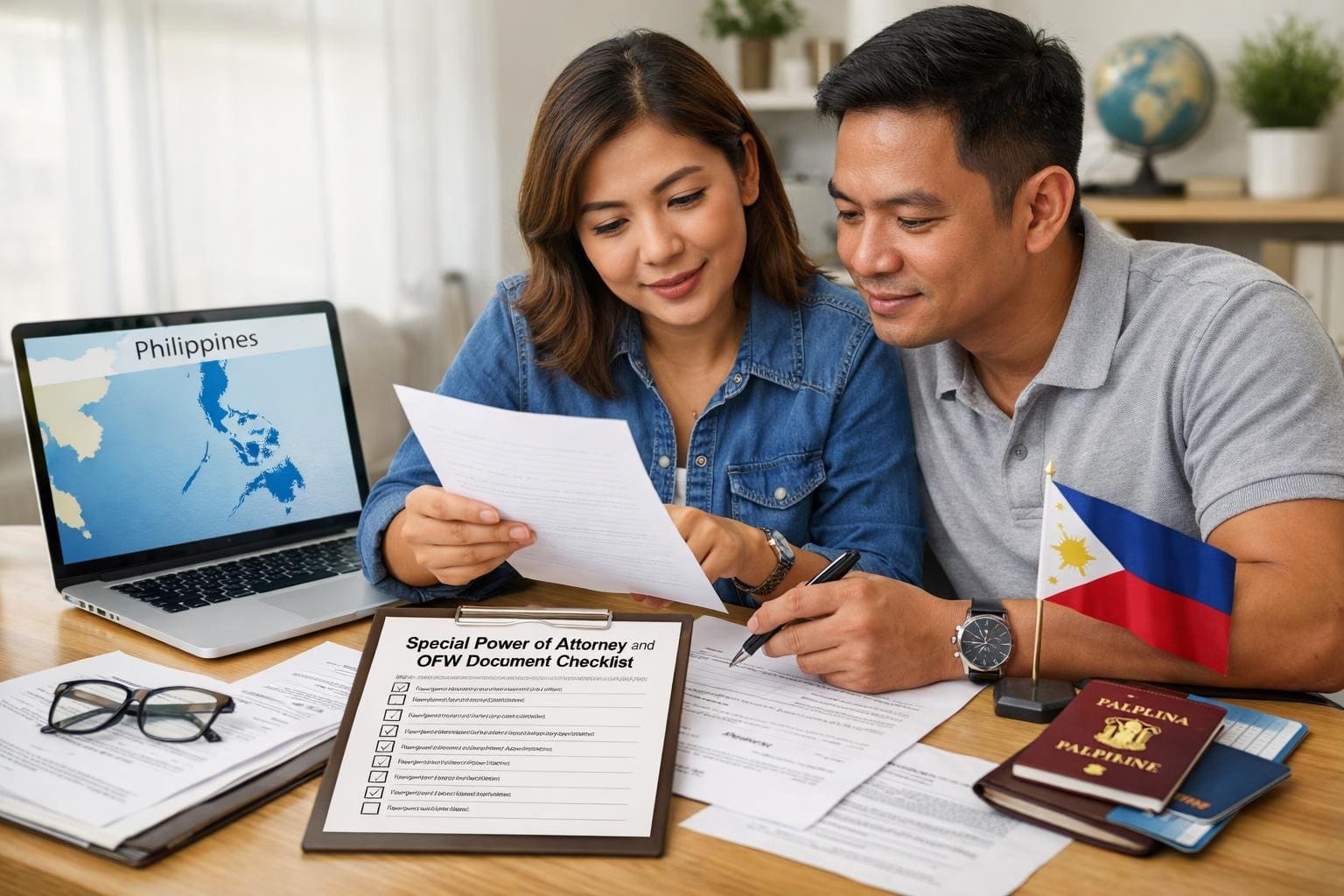
Indeed, the Special Power of Attorney is the single most key paper for any OFW buying property online. Moreover, without it, no one in the Philippines can legally sign on the buyer’s behalf. Paired with a complete set of ID and income papers, the SPA forms the backbone of each remote buy.
What Your SPA Should Authorize
Also, a well-drafted SPA should be clear. It must name who is authorized to act, the property involved, and the exact actions allowed. Therefore, vague SPAs create problems and can be rejected by builders, banks, and government offices.
At minimum, the SPA should authorize the agent to:
- Sign booking agreements, contracts to sell, and deeds of absolute sale
- Submit loan forms and supporting papers
- Pay fees, taxes, and charges related to the buy
- Receive the title and other title papers
- Represent the buyer before the BIR, Registry of Deeds, and DHSUD
If financing through Pag-IBIG or a bank, include clear language authorizing the agent to apply for and sign the loan on the buyer’s behalf. Some lenders have their own SPA templates that must be used.
How to Notarize and Notarize Papers Abroad
The SPA must be notarized in the OFW’s host country and then notarized through one of two methods:
- Apostille (for countries under the Apostille Convention): The paper is apostilled by the competent authority in the host country. Since the Philippines joined the Apostille Convention, this is the simpler route for OFWs in most countries.
- Consularization (for countries not covered by the Apostille Convention): The paper is notarized at the nearest Philippine Embassy or Consulate.
After notarization, the SPA must be sent to the agent in the Philippines. Digital copies are not accepted for property purchases. Use a reliable courier with tracking.
Core IDs, Proof of Income, and Buyer Needs
Beyond the SPA, OFW buyers should prepare the following papers in advance:
- Valid Philippine passport (copy of data page)
- Abroad Work Certificate (OEC) or equivalent proof of work abroad
- Certificate of Work and Pay from the current employer
- Latest payslips covering three to six months
- Bank statements covering three to six months
- Tax ID Number (TIN)
- Government-issued IDs (two valid IDs are standard)
- Marriage papers (if valid)
Loan applicants may also need an work contract translated into English and a consularized or apostilled copy of income papers. Preparing all before the property search begins prevents delays once a unit is found.
Financing, Fees, and Payment Planning
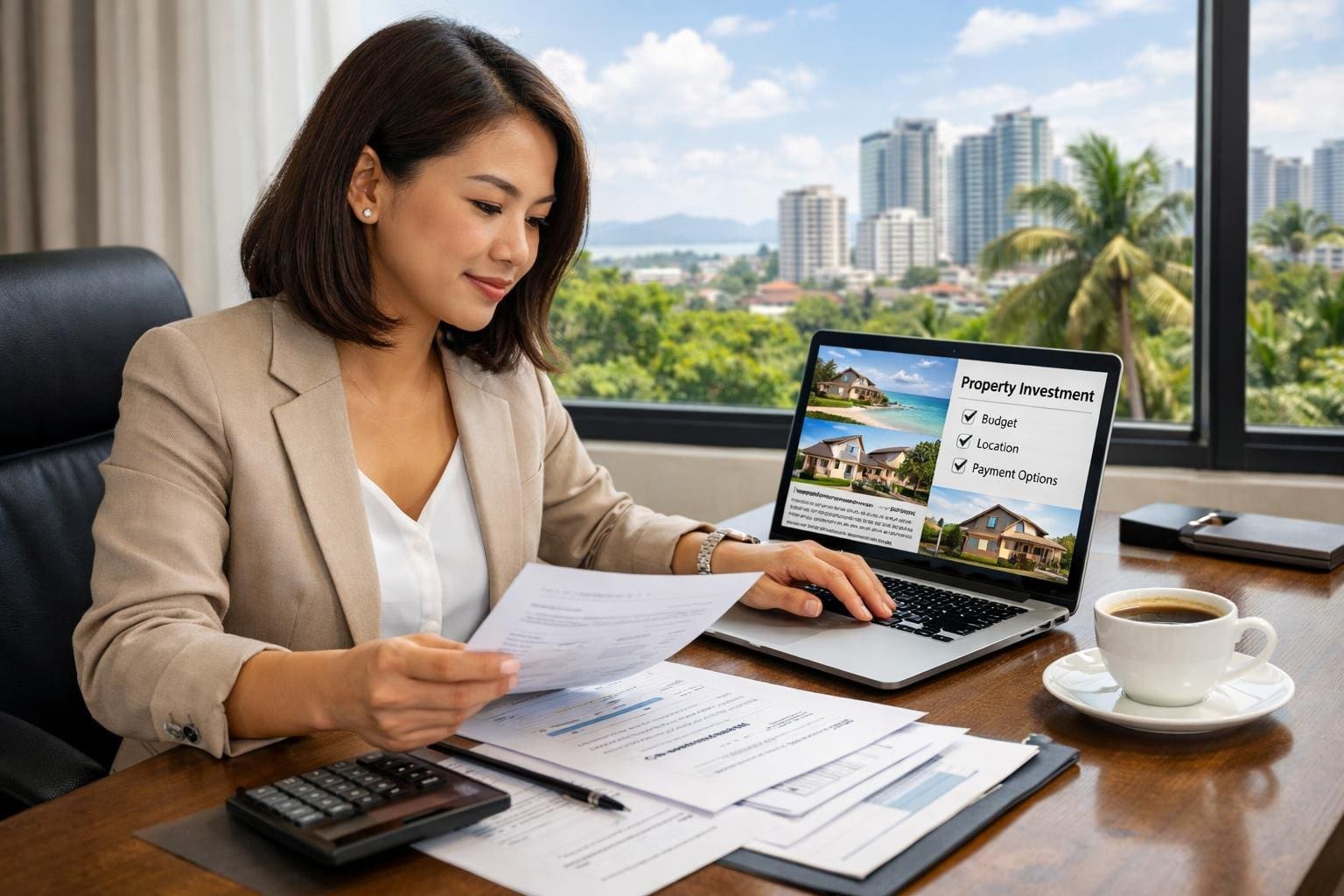
Financing a property buy from abroad involves choosing the right loan product. Also, know how payments are structured and budget for taxes and fees at closing. Yet, the three main financing routes each serve different buyer profiles.
Pag-IBIG, Bank Loans, and builder loans
Pag-IBIG Fund Housing Loan is the most affordable option for OFWs who are active members. Still, loan rates start as low as 3% per year for loans up to PHP 6 million, with repayment terms of up to 30 years. Also, OFWs must have at least 24 monthly payments to qualify. The SPA holder can file the form in person at a Pag-IBIG branch.
Bank housing loans from major Philippine banks often carry loan rates between 6% and 8% per year. Also, banks often process forms faster than Pag-IBIG and may allow higher loan amounts. Finally, some banks offer OFW-clear packages with streamlined needs.
builder loans (in-house) is the easiest to qualify for. Builders set their own terms, often requiring a smaller down payment spread over months with no interest. The balance is then financed at rates that are often higher than bank rates. This option works well for buyers who cannot meet Pag-IBIG or bank needs.
| Financing Option | Loan rate | Loan Term | Best For |
|---|---|---|---|
| Pag-IBIG | 3% to 5.375% per year | Up to 30 years | Budget-conscious OFWs with active membership |
| Bank Loan | 6% to 8% per year | Up to 25 years | Buyers who want faster processing and higher limits |
| builder loans | 12% to 18% per year | 5 to 15 years | Buyers who need easier qualification |
Booking fees, Down Payments, and Monthly Payment
The typical payment structure for a Philippine property buy follows this pattern:
- Booking fee: PHP 10,000 to PHP 50,000 (deducted from the total price)
- Down payment: 10% to 20% of the total contract price, often payable in installments over 12 to 36 months for pre-selling units
- Monthly payment: The remaining balance financed through Pag-IBIG, a bank, or the builder
For pre-selling condos, many builders offer zero-interest down payment terms spread over the construction period. This gives OFWs time to save while the project is being built.
Taxes, Transfer Costs, and Other Closing Expenses
Closing costs in the Philippines often add 5% to 8% on top of the buy price. Buyers should budget for the following:
- documentary stamp tax (DST): 1.5% of the selling price or zonal value, whichever is higher
- Transfer Tax: 0.5% to 0.75% depending on the local government unit
- Filing Fee: Based on a sliding scale tied to the property value
- Notarial Fee: Often 1% to 2% of the selling price
- Capital Gains Tax (6%) or Creditable Withholding Tax (1.5% to 6%): Often the seller’s responsibility. But buyers should confirm this in the contract
Always clarify in writing which party pays each cost. Some builders cover certain fees as part of promotional offers, mainly for pre-selling units.
Why Cebu Stands Out for OFW Buyers
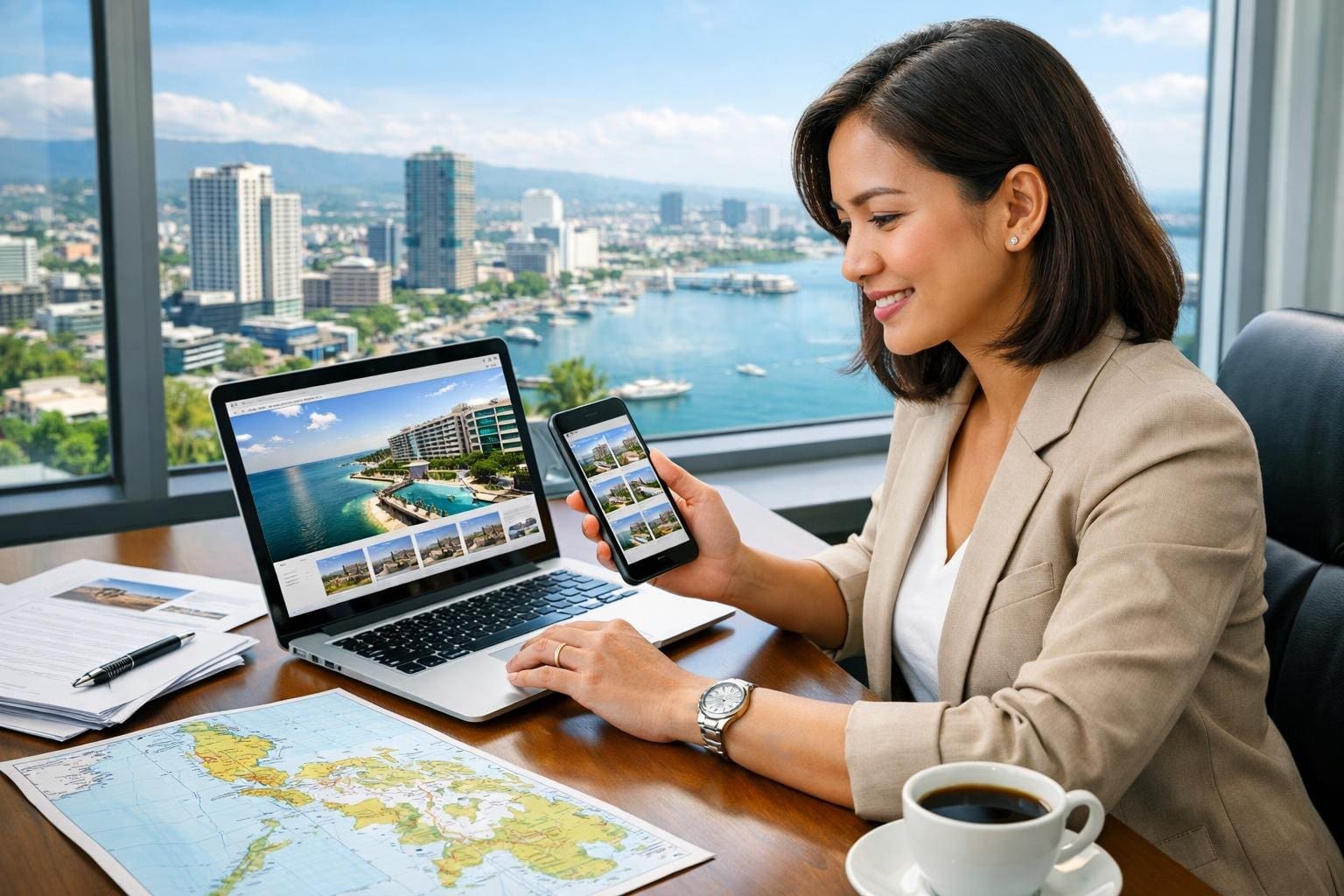
Now, Cebu has long ranked among the top property markets in the Philippines outside Metro Manila. For OFWs looking to buy property in the Philippines, the combination of lower entry prices, strong rental yields. Also, ongoing infrastructure projects make Cebu a compelling option in 2026.
Cebu City, Mandaue, Lapu-Lapu, and Talisay at a Glance
Each of Cebu’s key cities offers a different asset profile:
- Cebu City is the economic and cultural center. IT Park and Cebu Business Park anchor the commercial core. Also, condo projects in these areas attract BPO workers and young experts as tenants.
- Mandaue sits adjacent to Cebu City and has seen rapid commercial growth. Its lower price points and proximity to major business areas make it attractive for first-time buyers.
- Lapu-Lapu covers Mactan Island, where the international airport and resort tourism drive demand. Properties here appeal to buyers targeting short-term rental income from tourists and expats.
- Talisay offers house-and-lot projects at more affordable prices. It suits OFWs planning to return home and wanting a suburban setting close to Cebu City.
Where Demand Is Strong for Homes, Rentals, and Asset Property
Rental demand in Cebu remains robust across some segments. BPO employees, university students, and foreign experts all compete for well-located condo units. Areas near IT Park and Cebu Business Park report low vacancy rates.
The Mactan-Cebu International Airport expansion and the planned Bus Rapid Transit system continue to push property values upward in surrounding areas. New projects like Mivela Garden Residences and Mandtra Residences are positioned to gain from these infrastructure improvements.
How to Match Your Goal With the Right Cebu Place
Matching a property to the right place depends entirely on the buyer’s objective:
| Buyer Goal | Recommended Area | Property Type |
|---|---|---|
| Monthly rental income | IT Park, Cebu Business Park | Studio or 1-bedroom condo |
| Future family home | Talisay, Mandaue | House and lot |
| Vacation or short-term rental | Mactan, Lapu-Lapu | Resort-style condo |
| Long-term capital appreciation | Emerging corridors near BRT route | Pre-selling condo or lot |
Brokerages with deep local knowledge, such as Cebu Grand Realty and its team of over 15 years of Cebu market experience, can help match an OFW’s budget and timeline to the right property and place.
Mistakes to Avoid When Buying From Abroad

Indeed, distance creates real risk. Thus, OFW buyers cannot inspect a property in person, meet a seller face to face, or visit a government office to check records. So, scammers and unlicensed operators exploit this gap. Thus, knowing the most common red flags protects buyers from costly errors.
Red Flags in Listings, Titles, and Payment Requests
Some warning signs indicate a fraudulent or risky buy:
- Listings with no builder name or project details. Valid listings identify the builder, building name, unit number, and broker.
- Titles with annotations, liens, or claims. Any mark on a title signals an unresolved claim. A clean title should have no adverse annotations.
- Requests to send money to a personal bank account. Payments should always go to the builder’s corporate account or the seller’s account as stated in the contract. Never wire money to a third party’s personal account.
- Pressure to pay right away without papers. A valid seller or builder will provide official receipts, contracts, and time to review terms.
Why Checked Listings and Licensed Experts Matter
Working with a PRC-licensed real estate broker is not optional. It is the single best protection against fraud. Licensed brokers are regulated, accountable, and traceable. They carry expert liability and have a license that can be revoked for misconduct.
Checked listings mean the property exists, the details are accurate. Also, the seller has been checked. Also, platforms and brokerages that check their listings, like Cebu Grand Realty, reduce the risk of fake or misleading postings. Always ask for the broker’s PRC license number and check it through the Expert Regulation Commission’s online portal.
Final Pre-Buy Checks Before You Send Money
Before committing any funds, OFW buyers should confirm the following:
- The title is clean and matches the seller’s ID
- Builder holds a valid DHSUD License to Sell
- Also verify the broker’s PRC license is active
- Booking deal and contract must specify all payment terms in writing
- Official receipts will be issued for each payment
- The SPA is properly notarized, notarized, and received by the agent
Skipping any of these checks opens the door to disputes, delays, or outright loss of money. Due diligence takes time. But it costs far less than recovering from a bad deal.
Frequently Asked Questions

Can I complete a property buy in the Philippines without traveling home?
Yes. Filipino citizens can complete the entire property buying process online using a Special Power of Attorney. The SPA authorizes a trusted agent to sign contracts, submit papers and pay fees. The agent also receives the title on the buyer’s behalf. Thousands of OFWs successfully buy property this way each year.
What is a Special Power of Attorney, and how do I prepare and notarize it abroad?
A Special Power of Attorney is a legal paper that grants a named person the authority to act on the buyer’s behalf for clear purchases. It must be notarized in the OFW’s host country and then apostilled (for countries under the Apostille Convention) or consularized at the nearest Philippine Embassy or Consulate. The paper must be sent to the agent in the Philippines. However, digital copies are not accepted.
What papers do lenders and builders often require from abroad buyers?
Most lenders and builders need a valid Philippine passport and proof of work abroad. They also need a work and pay certificate and three to six months of payslips and bank statements, a Tax ID Number, and a notarized and notarized SPA. Some institutions may request extra papers such as an work contract translated into English.
Which financing option is best for abroad buyers: Pag-IBIG, bank loan, or builder loans?
It depends on the buyer’s case. Pag-IBIG offers the lowest loan rates starting at 3% per year and is best for OFWs with active membership and at least 24 contributions. Bank loans process faster and may approve higher amounts. builder loans is easiest to qualify for but carries higher loan rates, often between 12% and 18% per year.
How can I check that a broker, builder, or listing is valid before I pay anything?
Check the broker’s PRC license number through the Expert Regulation Commission’s website. Check the builder’s DHSUD License to Sell and Certificate of Registration. For resale properties, obtain a certified true copy of the title from the Registry of Deeds. Ask for references from past buyers and read independent reviews. A credible broker will provide all of this details without hesitation.
What taxes, fees, and steps are involved in transferring the title to my name while I’m abroad?
Title transfer requires payment of the documentary stamp tax (1.5%), transfer tax (0.5% to 0.75%). A filing fee applies based on the value. The buyer’s agent files for BIR tax clearance, pays the valid taxes. The agent then submits the Deed of Sale and supporting papers to the Registry of Deeds. Once processed, the new Transfer Certificate of Title or Condo Certificate of Title is issued in the buyer’s name.