The Step-by-Step Process of Buying Agricultural Land in the Philippines
Buying agricultural land in the Philippines is a practical move for farming, agribusiness, or just as a long-term investment. The process is shaped by laws that protect both ownership and proper land use. Only Filipino citizens and Filipino-owned companies are allowed to own agricultural land—foreigners, on the other hand, have to stick to lease or corporate workarounds.
It all starts with picking land that fits your needs and its legal classification. Zoning, soil quality, and access to roads or utilities can make or break a land’s value and productivity. Land closer to markets and services usually means lower transport costs and, let’s be honest, fewer headaches.
Legal checks are crucial. Verifying the title at the Register of Deeds is a must for confirming ownership and dodging future disputes. Going through documents like the Transfer Certificate of Title (TCT) is a basic step before any money changes hands.
Key Takeaways
- Philippine law sets strict rules on who can own or lease agricultural land.
- Thorough land checks are your best defense against legal or financial trouble.
- Following the right steps after buying helps you steer clear of common ownership issues.
Eligibility and Legal Requirements

Buying land here means sticking to rules about who can own, use, or control agricultural property. The law sets limits depending on citizenship, how ownership is structured, and even the size of the land. National agencies like the Department of Agrarian Reform (DAR) play a big part in this process.
Land Ownership Rules for Filipino Citizens
Filipino citizens can own agricultural land under their own name, whether it’s for farming, livestock, or agribusiness. There are size limits too, which depend on the land’s type and location—agrarian reform rules set the specifics.
Before buying, it’s smart to check that the land is officially classified as agricultural. Local zoning offices or the DAR can confirm this. It’s also important to see if the land falls under agrarian reform, since that can restrict sales or require extra clearances.
Filipino buyers should always verify the Transfer Certificate of Title (TCT) to make sure there are no liens, disputes, or tenancy claims. Skipping these steps can mean legal trouble down the line.
Corporate Ownership Structures
Corporations can own agricultural land if at least 60% of the company’s shares are Filipino-owned. The law’s strict here—fall below that, and the deal could be voided.
Corporate buyers must register with the Securities and Exchange Commission and prove Filipino control, like through voting rights and board seats. These details matter, especially when it’s time to transfer the title.
Some land under agrarian reform needs DAR approval before it can be sold. There might also be restrictions on how the land can be used or resold, so it’s wise to check these early to avoid getting stuck in limbo.
Options for Foreigners and Balikbayans
Foreigners can’t directly own agricultural land. They can lease for up to 50 years, with a possible 25-year extension. Leasing is the main way for non-citizens to run long-term farm operations without actual ownership.
Another route is forming a corporation where at least 60% is Filipino-owned. This lets foreigners get involved, but legal control stays with Filipinos.
Balikbayans—former Filipinos who regain citizenship under Republic Act 9225—can own land again, but they still have to follow land size limits and agrarian reform rules.
| Buyer Type | Allowed Rights |
|---|---|
| Foreigner | Lease only |
| Foreign-backed corporation | Ownership with 60% Filipino control |
| Balikbayan | Ownership after citizenship reacquisition |
Key Laws and Regulatory Agencies
Several laws cover agricultural land ownership. The Philippine Constitution sets the citizenship rules, while the Comprehensive Agrarian Reform Law (CARL) deals with land distribution and transfer limitations.
The Department of Agrarian Reform (DAR) handles land classification and compliance, issuing clearances when needed.
Other agencies you’ll bump into:
- Register of Deeds – for title transfers
- Bureau of Internal Revenue – for taxes
- Local government units – for zoning and land use
Each one has a say in whether your land purchase is legally sound.
Preliminary Due Diligence

Before anything else, due diligence is about making sure the land’s legal, usable, and not hiding any nasty surprises. You’ll need to check title records, land use rules, tax status, and see if what’s on paper matches what’s on the ground.
Title Verification and Authenticity Check
Always confirm the seller really owns the land and has the right to sell. Ask for the Transfer Certificate of Title (TCT) or Original Certificate of Title (OCT), then double-check it with the Registry of Deeds where the land is located.
Look at the owner’s name, lot number, and land area. Any mismatch is a red flag. Check for annotations—liens, mortgages, or court cases can block a sale.
Common title checks
- Correct TCT or OCT number
- No adverse claims or encumbrances
- Owner details match Registry of Deeds records
Get a certified true copy from the Registry of Deeds. It’s the safest bet for proof.
Zoning and Land Classification Assessment
Make sure the land is really agricultural and that you can use it as planned. Verify zoning with the local government and check land classification with the right agencies.
If the land’s under agrarian reform, that can limit what you can do with it—or even if you can buy it at all. Ask for proof of compliance or exemptions when needed.
Land classification affects market value and what you can do in the future. Some land can’t be converted to residential or commercial use without jumping through hoops.
Documents to review
- Zoning certification
- Land classification records
- Agrarian reform status, if needed
Tax Declaration and Real Property Tax Compliance
A valid tax declaration shows the land’s ownership history and how it’s listed in local tax records. Compare it with the title—details should match up.
Check that real property taxes are paid. Unpaid taxes can mess up the transfer or hit you with extra costs. Ask the local treasurer for a tax clearance certificate.
Remember, tax records usually reflect assessed value, not market value. Don’t use tax values alone to set your price.
Important checks
- Up-to-date tax declaration
- Official receipts for latest tax payments
- Tax clearance from the local treasury
Physical Survey and Boundary Validation
A physical survey checks the land’s exact size and boundaries. It’s best to hire a licensed surveyor for a relocation survey based on the title’s technical description.
The surveyor will look at boundary markers and spot any overlaps with neighboring lots. Missing or moved markers? That’s a recipe for disputes, especially out in the provinces.
Compare the survey results with the title and tax records. Any differences should be sorted out before you close the deal.
Survey focus areas
- Exact land area and shape
- Where boundary markers are placed
- Encroachments or overlaps
Step-by-Step Land Buying Process

The process goes from price talks to legal transfer, focusing on clear contracts, paying the right taxes, and registering with government offices to lock in your ownership.
Negotiation and Sale Agreement
Buyer and seller hash out the price, payment terms, and when the land changes hands. They confirm the land’s agricultural classification and check for tenants or any agrarian reform claims. If the land’s covered, DAR and SAC records are important, especially for clearances.
All key terms go into a written sale agreement: title number, area, boundaries, and who covers taxes and fees. Set deadlines for signing the deed of sale and paying taxes.
It’s wise to get copies of the title and tax declarations before handing over any money. A small earnest deposit can reserve the property while you finish your checks.
Preparation and Notarization of Deed of Sale
Next, the Deed of Absolute Sale is prepared with all the right details. It needs to match the title and survey, or you’ll run into registration headaches.
Both parties sign the deed before a notary public. Notarization makes it official. You’ll need a notarized deed to pay taxes and transfer the title.
Attachments might include valid IDs, tax clearances, and proof of authority if a company is involved. If agrarian rules apply, you’ll need the right DAR approvals. The notary logs the act and gives out certified copies.
Payment of Taxes and Transfer Fees
Taxes have to be paid on time or you risk penalties. Buyer and seller usually split the costs as agreed, but local custom often decides who pays what.
Common charges include:
| Item | Paid By | Notes |
|---|---|---|
| Capital Gains Tax | Seller | Based on selling price or zonal value |
| Documentary Stamp Tax | Buyer | Due after notarization |
| Transfer Tax | Buyer | Paid to the local government |
| Transfer fees | Buyer | Assessed by offices |
Make sure to keep receipts. Missing payments can stall the title transfer at the Registry of Deeds.
Transfer of Title and Documentation
The buyer submits the notarized deed, tax receipts, and clearances to the Registry of Deeds. The office cancels the old title and issues a new one in the buyer’s name.
Processing time depends on the location. It’s smart to keep an eye on the release date and ask for certified copies once ready. Afterward, the buyer should update the tax declaration with the local assessor’s office.
If it’s agricultural land, keep DAR records on file. Good documentation protects your ownership and makes things easier if you need to use the land as collateral or decide to sell later on.
Post-Purchase Considerations and Common Pitfalls
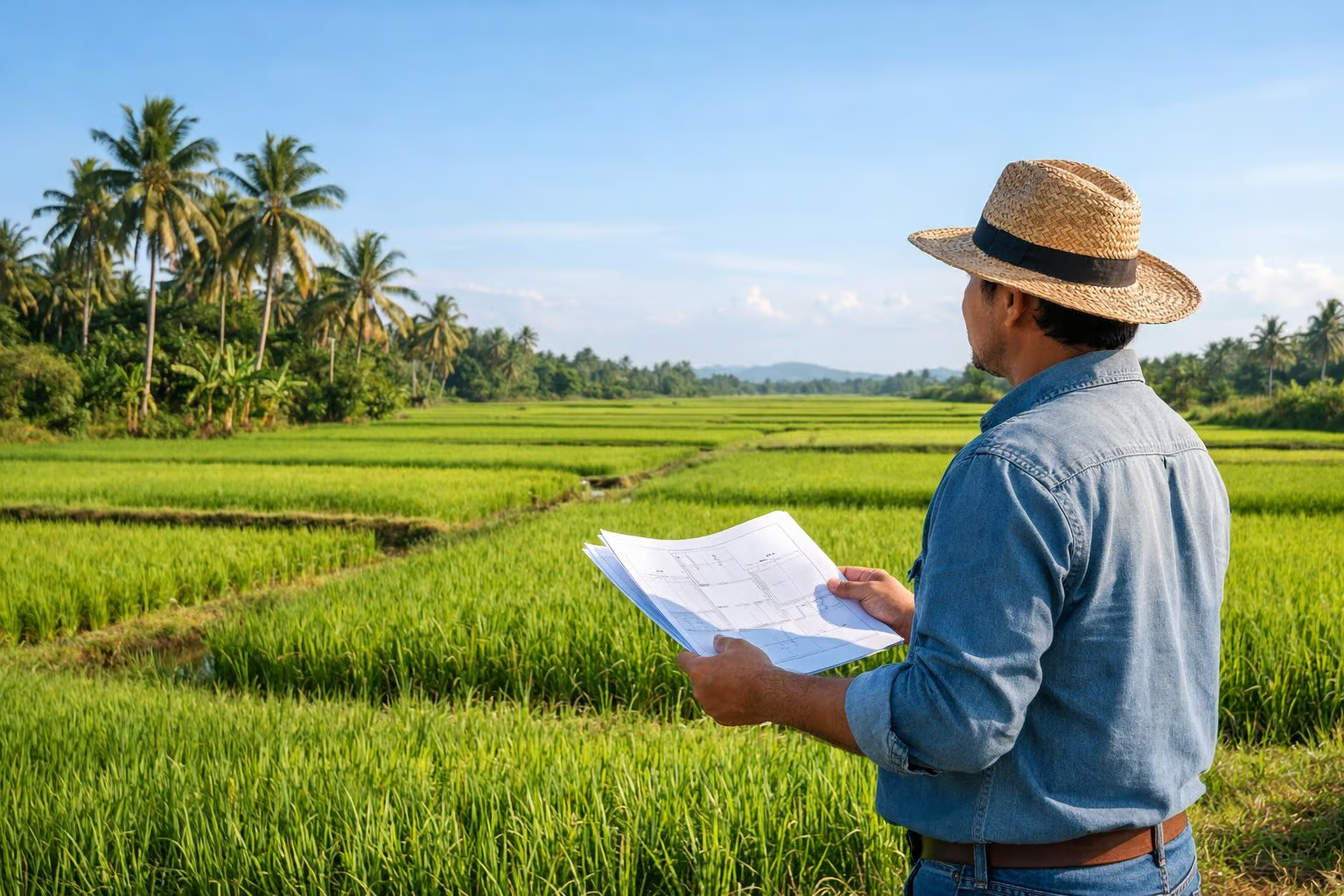
After buying agricultural land, there are a few more legal and practical steps you shouldn’t skip. These protect your ownership, help you avoid extra costs, and keep future headaches at bay. It’s not just about the sale—what you do after matters too.
Updating Ownership Records and Tax Responsibilities
The buyer needs to register the Deed of Sale with the Registry of Deeds. This is what gets the new Transfer Certificate of Title issued in their name. If you put this off, you might run into ownership problems down the road.
Don’t forget to pay all required taxes and fees—usually documentary stamp tax, transfer tax, and registration charges. If you’re late, expect penalties and interest. Once the title’s transferred, update records with the local assessor. This affects your real property tax bills and the official land value. Accurate records help if you want to sell or use the land for a loan later.
Securing Property Boundaries
It’s best to confirm the land’s boundaries early on. A licensed geodetic engineer can survey and check the lot lines and size. This avoids problems with neighbors over where your land actually ends.
Clear boundary markers are a must. They should line up with what’s on the title and survey plan. If markers are missing or get moved, that’s when disputes usually start.
Hang on to copies of the survey plan and related papers. These can really help if a boundary issue pops up. Acting early saves a lot of hassle and legal expenses, especially in rural spots where fences aren’t always clear.
Avoiding Fraud and Disputes
Keep all original documents somewhere safe—the title, tax receipts, approved survey plans, the works. Missing paperwork can make it tough to defend your rights.
Stay alert for fraud schemes like fake titles, multiple “owners,” or hidden unpaid taxes. Always verify documents with the Registry of Deeds and local government. It’s a bit of a hassle but worth it.
Land disputes often start from handshake deals or missing paperwork. Written contracts and official receipts protect everyone involved. If things get messy with heirs, neighbors, or old owners, clear documentation is your best defense.
Frequently Asked Questions

This section covers legal eligibility, foreign participation, title checks, picking the right land, and steps for a legal purchase. It’s all about what really happens when buying agricultural land in the Philippines.
What are the eligibility criteria for buying agricultural land in the Philippines?
Filipino citizens can own agricultural land, but there are land size limits and agrarian laws to follow. Corporations can own, too, as long as at least 60% of the company is Filipino-owned.
Balikbayans may reacquire land under Republic Act 9225, within the size limits set by law. These rules keep things legal and make sure land is used properly.
How can a foreign individual or corporation legally invest in Philippine agricultural land?
Foreigners can’t directly own agricultural land under the Constitution. They can lease for up to 50 years, with a possible 25-year extension.
It’s possible to invest through a corporation that’s at least 60% Filipino-owned. That way, foreigners can join agribusiness without breaking the ownership rules.
What is the significance of the Transfer Certificate of Title when purchasing agricultural land?
The Transfer Certificate of Title (TCT) is proof of ownership for private land. It lists the owner, land description, and any liens or encumbrances.
Buyers depend on the TCT to make sure the seller really owns the property. A clean, verified title helps avoid future disputes.
What are the key factors to consider when identifying suitable agricultural land for purchase?
First, check that the land is actually classified as agricultural. Zoning affects what you can do with it.
Look at soil quality, water and road access, and how close it is to markets. These impact productivity, costs, and the land’s value over time.
What steps should be taken to ensure the verification of land title and ownership?
Ask for a certified true copy of the title from the Registry of Deeds. This confirms it’s real and current.
Also check for unpaid taxes, mortgages, or agrarian reform coverage. Visiting the site helps make sure the boundaries match what’s on paper.
How does one finalize the purchase of agricultural land in terms of documentation and financial settlement?
Once both parties agree on the terms, they sign a notarized Deed of Absolute Sale. The buyer’s got to handle the taxes—capital gains tax, documentary stamp tax, all that.
After settling those, the next step is registering the deed with the Registry of Deeds. That’s when the registry issues a new Transfer Certificate of Title in the buyer’s name.