

The Eviction Process in the Philippines: A Landlord’s Legal Guide
A tenant has not paid rent in three months. They ignore your messages. Frustrated, you think about changing the locks, cutting the water, or hauling their things to the curb. Stop right there. In the Philippines, every one of those moves is illegal. Any of them can turn you from the wronged landlord into the one facing a lawsuit. The eviction process here is a legal procedure, and it is the only path that actually works.
The good news is that the law gives landlords a clear route to recover their property. It applies to a tenant who will not pay or who breaks the lease. The route just has to follow the right steps, in the right order. This guide walks through the lawful eviction process in the Philippines. The aim is to protect your property without exposing yourself to liability.
Key takeaways
- Self-help eviction is illegal. You cannot change locks, cut utilities, or remove a tenant’s belongings on your own.
- Eviction must follow a legal path: a written demand, barangay conciliation, and, if needed, an ejectment case in court.
- You need a valid ground: non-payment, an expired lease, or a serious breach of the lease terms.
- Only a court can order eviction, and only a sheriff can enforce it. A landlord never removes a tenant personally.
- The whole process takes months, so prevention through good screening and a solid lease is far cheaper than cure.
First, what you are not allowed to do

Before the steps, understand the lines you cannot cross. A landlord may not change the locks while the tenant still lives there. Cutting off the water or electricity to force someone out is also off limits. So is removing or holding their belongings. Threatening or harassing a tenant into leaving is illegal too.
These are forms of what the law treats as illegal eviction. They can expose you to criminal and civil liability. Even a tenant who is clearly in the wrong keeps the right to due process. The eviction process exists precisely so you do not have to take matters into your own hands.
Valid grounds for eviction
You cannot evict simply because you want the unit back. The law recognises specific grounds. The most common is non-payment of rent. Others include a lease that has reached its end and a serious violation of the lease, such as illegal use or unauthorised subleasing. For covered units, the owner’s legitimate need to repossess or sell the property is also a ground, under the conditions the law sets.
Your written lease matters enormously here. A clear agreement that spells out the rent, the term, and the grounds for termination is your strongest footing. This is one more reason to put everything in a proper lease rather than rely on a handshake.
Step 1: Serve a written demand
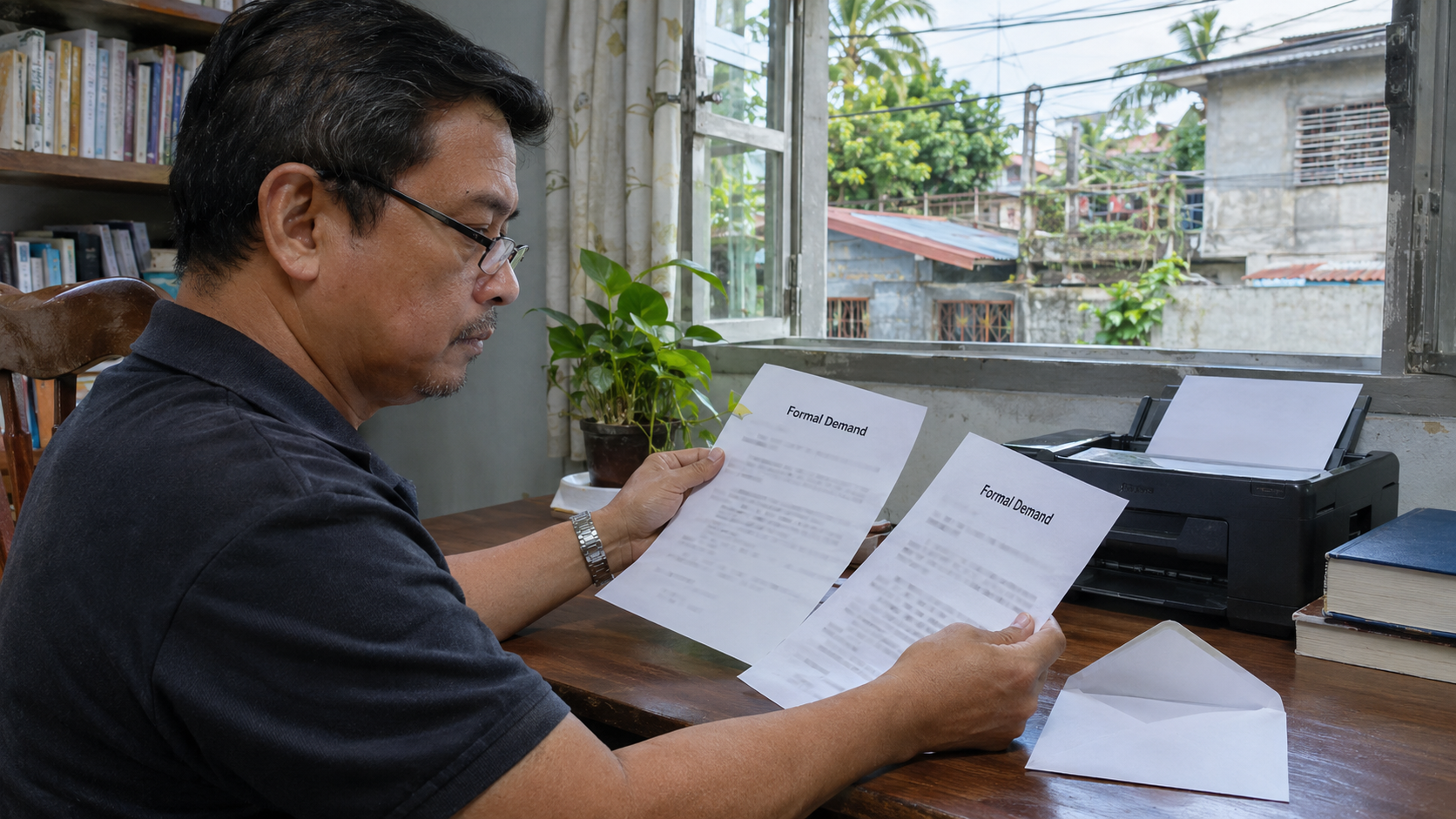
The process starts with a formal written demand, not a court filing. For non-payment, this is usually a demand to pay or vacate within a stated period. For other grounds, it is a demand to vacate. Put it in writing, keep proof that the tenant received it, and keep a copy. This document is the foundation of any case that follows. Do not skip it or rely on text messages alone.
Step 2: Go through barangay conciliation
Before most disputes can reach court, the law requires the parties to try to settle at the barangay level. When you and the tenant live in the same city or municipality, you file a complaint with the barangay. It then calls both sides to mediate. A tenant who pays or agrees to leave ends the matter there, cheaply.
Should mediation fail, the barangay issues a Certificate to File Action. You need this certificate before a court will hear an ejectment case in most situations. Treat this step as a genuine chance to resolve things. A settlement here saves everyone months of time and cost.
Step 3: File an ejectment case in court

If the tenant still will not pay or leave, the next step is to file an ejectment case. For non-payment or an expired lease, this is usually an action for unlawful detainer. You file it at the Municipal Trial Court with jurisdiction over the property. These cases follow the Rules on Summary Procedure, which are designed to be faster than an ordinary lawsuit. You present the lease, the demand letter, the proof of service, and the barangay certificate.
This is the stage where legal help earns its keep. A single procedural misstep can get a case dismissed and send you back to the start. It is worth consulting a lawyer before filing, rather than after a rejection.
Step 4: The decision and the writ of execution
When the court rules in your favour, it issues a decision ordering the tenant to vacate. The ruling often includes the back rent owed. Even then, you still do not act yourself. If the tenant does not leave, the court issues a writ of execution, and a sheriff carries out the eviction. Only this officer of the court can lawfully remove a tenant and their belongings. The landlord’s job is to follow the process, not to enforce it in person.
The Rent Control Act and tenant protections

For residential units within the rent ranges the Rent Control Act covers, the law adds extra protections. These sit on top of the general rules. It limits how much and how often rent can be increased. It also sets out specific grounds and notice periods for eviction, including the owner’s legitimate need to repossess the unit. Knowing whether your unit falls under rent control changes what you can and cannot do. It is worth checking before you act.
How long it really takes
Even under summary procedure, a contested eviction usually takes several months from demand to enforced move-out. A tenant who disputes the case or files appeals can stretch it further. That timeline is exactly why experienced landlords treat eviction as the last resort, not the first move. Every month in court is a month of lost rent and legal cost.
The cheapest eviction is the one you avoid

Most evictions trace back to a decision made before the tenant moved in. Screening applicants carefully and watching for the usual warning signs prevents many problems at the door. A strong, written lease closes the loopholes a difficult tenant might exploit, and it keeps the rental income you rely on predictable. And when rent is late, deal with it early and in writing. Letting months pile up is what turns a small problem into a court case.
Good habits during the tenancy help too. Keep up with repairs, from a leaky faucet to a recurring damp problem, so small maintenance issues never become reasons to withhold rent. Handle the security deposit fairly and on time at move-out, which closes the tenancy cleanly and heads off a dispute that can sour into something worse. When a unit does fall vacant, knowing the best time to advertise it helps you re-let it quickly and limit lost income.
For owners who would rather not manage any of this, professional property management takes the screening, the paperwork, and the hard conversations off your plate. It is also how many landlords grow their rental income while spending less of their own time on it.
Dealing with a difficult tenant, or want to avoid one in the first place? Talk to the Cebu Grand Realty team. We bring over sixteen years in Cebu real estate and manage both residential and commercial rentals across the island, so we can help you handle a tenancy the right way, from screening to move-out. You can also read how our team works with clients.
This article is general information for landlords in the Philippines, not legal advice. Eviction cases turn on specific facts and current law, so consult a licensed lawyer before acting on a particular situation.
Frequently asked questions

Can I just change the locks if my tenant stops paying?
No. Changing the locks while a tenant still occupies the unit is illegal eviction. It can expose you to criminal and civil liability. You must go through the legal eviction process, however frustrating the delay feels.
Do I need a lawyer to evict a tenant?
You are not strictly required to have one for the early steps. But an ejectment case in court is easy to lose on a technicality. For anything that reaches filing, a lawyer is a worthwhile investment.
Can I cut off the water or electricity to make them leave?
No. Cutting utilities to force a tenant out is a form of illegal eviction, even when the tenant owes you rent. Keep the services on and pursue the lawful process instead.
How long does the eviction process take?
Usually several months, even under the faster summary procedure. It runs longer if the tenant contests the case or appeals. Serving the demand and completing barangay conciliation properly early on helps avoid further delay.